Reverse shoulder replacement is a highly successful treatment option that delivers excellent outcomes in cases of irreparable tears of the rotator cuff tendons and in elderly patients with complex, multi-fragment shoulder fractures that lead to shoulder arthritis. This special prosthesis system reduces pain and restores functional use of the shoulder. In complex scenarios where conventional shoulder prostheses fall short, reverse shoulder replacement enables patients to return to daily life with less pain, greater mobility, and more independence.
Add us as a preferred source on GoogleSee our new articles higher in your searchesAddWhat Is a Reverse Shoulder Replacement?
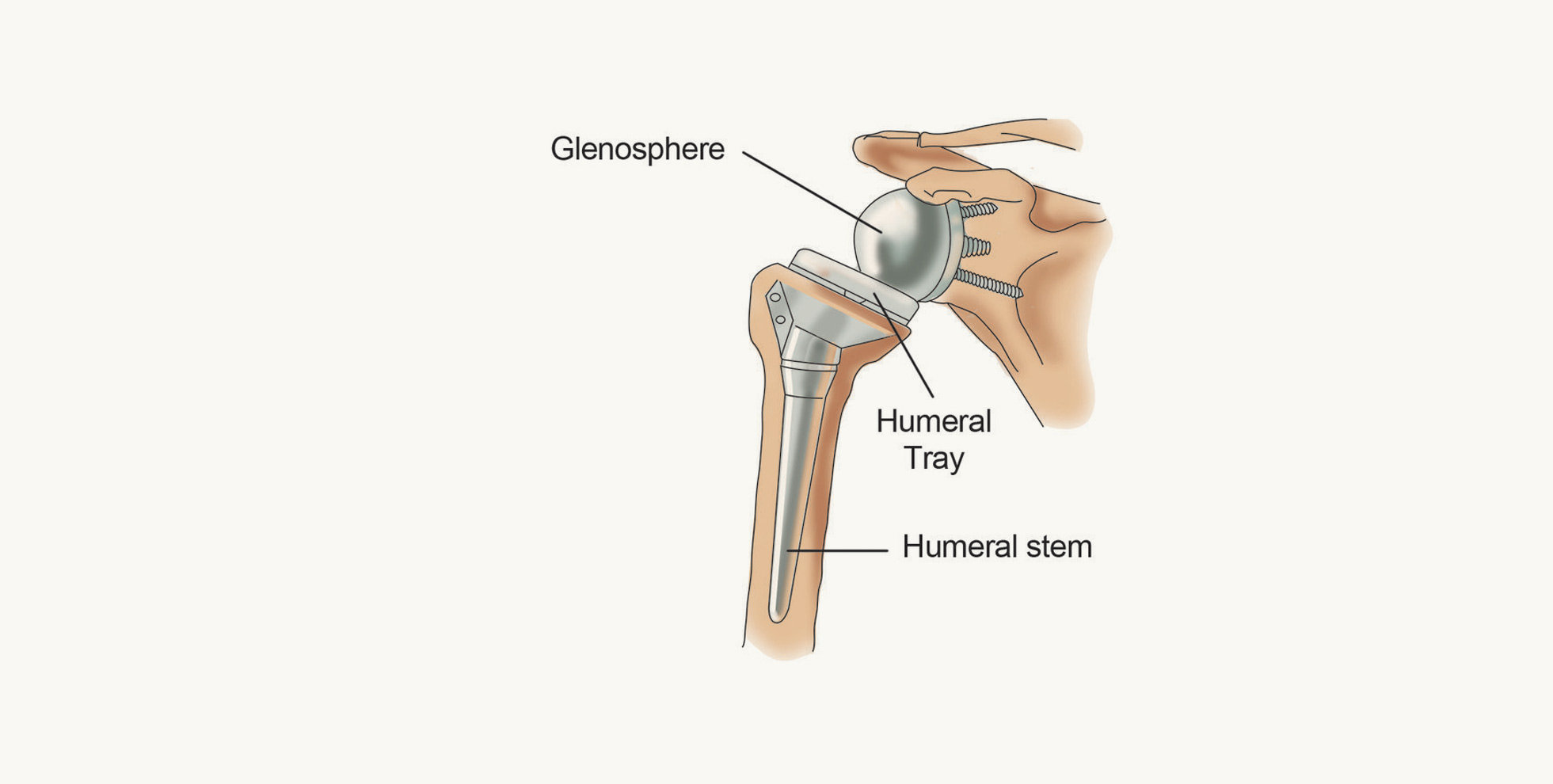
Reverse shoulder replacement (reverse shoulder arthroplasty) is a specialized prosthetic technique used in patients with severe osteoarthritis (arthrosis) of the shoulder joint accompanied by full-thickness tears of the rotator cuff muscles. This prosthesis is designed to both relieve pain and restore shoulder motion. Unlike classic (anatomic) shoulder prostheses, a reverse shoulder replacement inverts the natural ball-and-socket configuration of the joint.
When Is Reverse Shoulder Replacement Performed?
Reverse shoulder replacement is performed in select situations to reduce shoulder pain and regain arm mobility—particularly when the rotator cuff muscles no longer function or cannot be repaired. The most common indications include:
1. Irreparable Rotator Cuff Tears
The muscles that lift and guide the shoulder (rotator cuff) may tear due to age or overuse. If the tears are massive, surgery is delayed, and repair is no longer suitable, reverse shoulder replacement is the best option. In these cases, the deltoid muscle assumes the lifting role, restoring shoulder movement.
2. Shoulder Fractures in the Elderly
In patients aged 70 and older, multi-fragment fractures of the humeral head often fail to heal properly, and bone quality is typically reduced (osteoporosis). In such cases, reverse shoulder replacement is preferred to both treat the fracture and preserve shoulder mobility.
3. Failure of Previous Shoulder Surgeries
Reverse shoulder replacement can also be a salvage procedure for patients who previously underwent shoulder arthroplasty but developed issues such as loosening, dislocation, or loss of rotator cuff function.
4. Advanced Inflammatory Arthritis
In inflammatory conditions such as rheumatoid arthritis, the shoulder joint may deteriorate over time. If the bony structures are adequate and the shoulder muscles are weak, a reverse shoulder prosthesis may be considered.
Who Is a Good Candidate for Reverse Shoulder Replacement?
Reverse shoulder replacement is not suitable for everyone. The best outcomes are achieved in patients with the following characteristics:
- Difficulty lifting the arm overhead but without heavy physical demands
- Typically age 70 or older, or biologically elderly
- Intact deltoid muscle—the large outer shoulder muscle still functions well
- No nerve injury around the shoulder
- Adequate glenoid (scapular) bone to support the prosthesis
How Is Reverse Shoulder Replacement Performed?
Reverse shoulder arthroplasty replaces the articular surfaces of the shoulder with a specialized prosthesis. It is performed by experienced specialists in orthopedics and shoulder surgery, typically under general anesthesia, and usually takes about 1.5–2 hours.
Key Steps of the Procedure
- Incision
A small incision is made at the front or side of the shoulder to access the joint. - Removal of Damaged Tissue
Worn joint surfaces, torn tendon remnants, and—if necessary—bone fragments are carefully removed. - Placement of Prosthetic Components
- In the reverse design, a metal ball (glenosphere) is fixed to the glenoid where the socket normally sits.
- A plastic socket (liner) is placed on the humerus (upper arm bone).
This configuration enables shoulder motion via the deltoid muscle without relying on the nonfunctional rotator cuff.
- Assessment and Closure
After confirming implant stability and range of motion, the incision is closed and a sterile dressing is applied.
Why Is It Called “Reverse”?
It is called a “reverse” shoulder prosthesis because the ball-and-socket configuration is inverted:
- Normally, the socket is on the scapula (glenoid) and the ball is on the humeral head.
- In a reverse prosthesis, the metal ball is attached to the scapula and the plastic socket is placed on the humerus.
This change enables the deltoid muscle to elevate the arm when the rotator cuff can no longer function.
Recovery After Reverse Shoulder Replacement
Most patients report a marked reduction in shoulder pain and meaningful improvement in daily activities after surgery. Complete recovery, however, requires time and a structured course of physical therapy.
First Days in the Hospital
- Patients typically stay in the hospital for 1–2 days.
- An arm sling is applied and usually worn for 4–6 weeks.
- Light hand, wrist, and elbow movements can begin in the first few days.
Physical Therapy and Rehabilitation
- Physical therapy generally starts in the 2nd or 3rd week after surgery.
- Early on, passive exercises are used to maintain range of motion.
- Depending on the individual, full functional recovery is typically achieved within 3–6 months.
Postoperative Expectations
- Significant reduction in night pain
- Ability to lift the arm to shoulder level
- Independence in daily tasks such as dressing and hair care
- A more comfortable, less painful quality of life
Frequently Asked Questions About Reverse Shoulder Replacement
Is a reverse shoulder prosthesis permanent?
Yes. When properly performed, it can last about 15–20 years. In elderly patients, revision is often not required.
Will my arm regain its former strength after surgery?
Full native shoulder strength may not return, but thanks to the deltoid, most patients can lift the arm overhead. Daily activities can generally be performed comfortably.
Is there a risk of dislocation or loosening?
As with any prosthesis, there is a risk of loosening or instability, but when performed by experienced surgeons the rates are low. Adherence to physiotherapy further reduces these risks.
When can I drive after a reverse shoulder replacement?
Typically after 6–8 weeks—once pain is controlled and you have adequate control of the steering wheel. Always follow your surgeon’s specific advice.
Can I play sports with a reverse shoulder prosthesis?
Low-risk activities such as swimming, light resistance exercise, and walking are usually encouraged. Avoid heavy lifting, contact sports, and sudden high-load activities.
Conclusion
Reverse shoulder replacement is a specialized surgical solution that inverts the joint’s normal ball-and-socket anatomy. With this smart design, the powerful deltoid muscle takes over the lifting function when the rotator cuff can no longer be repaired, allowing patients to raise the arm to shoulder height again.
This procedure is ideal for patients with arthritis due to irreparable rotator cuff tears or for elderly individuals with multi-fragment shoulder fractures. The primary goals are to relieve severe—especially night—pain and to enable patients to independently perform daily activities such as hair care and dressing. While normal native shoulder strength is not expected, patients typically experience a clear improvement in quality of life and function.
Expert Doctor Recommendations
Reverse shoulder replacement is not appropriate for every case of shoulder pain or arthritis. Success depends on proper patient selection. It is most effective when the rotator cuff is irreparably damaged and—crucially—the deltoid muscle is intact. Therefore, the decision to operate should follow a thorough specialist evaluation.
The aim of this surgery is not to lift heavy loads or to return to previous competitive athletic performance, but to achieve a pain-free life and restore the function needed for daily tasks. Postoperative success, implant longevity, and range of motion depend directly on your adherence to the prescribed physiotherapy program.
For an individualized assessment and to determine the most suitable treatment for you, please contact Utku Erdem Özer. For more details, you can use our contact channels or book an appointment directly.