There are many causes of anterior knee pain. One of them is bipartite patella, a condition that often goes unnoticed but can cause significant discomfort in some individuals. This congenital structure, which occurs when the kneecap develops in two separate pieces, usually does not cause symptoms. However, in athletes or people who experience trauma to the knee area, it can lead to persistent anterior knee pain. This pain can reduce sports performance and make daily activities difficult.
Add us as a preferred source on GoogleSee our new articles higher in your searchesAddYou can read our article on anterior knee pain here.
What Is Bipartite Patella?
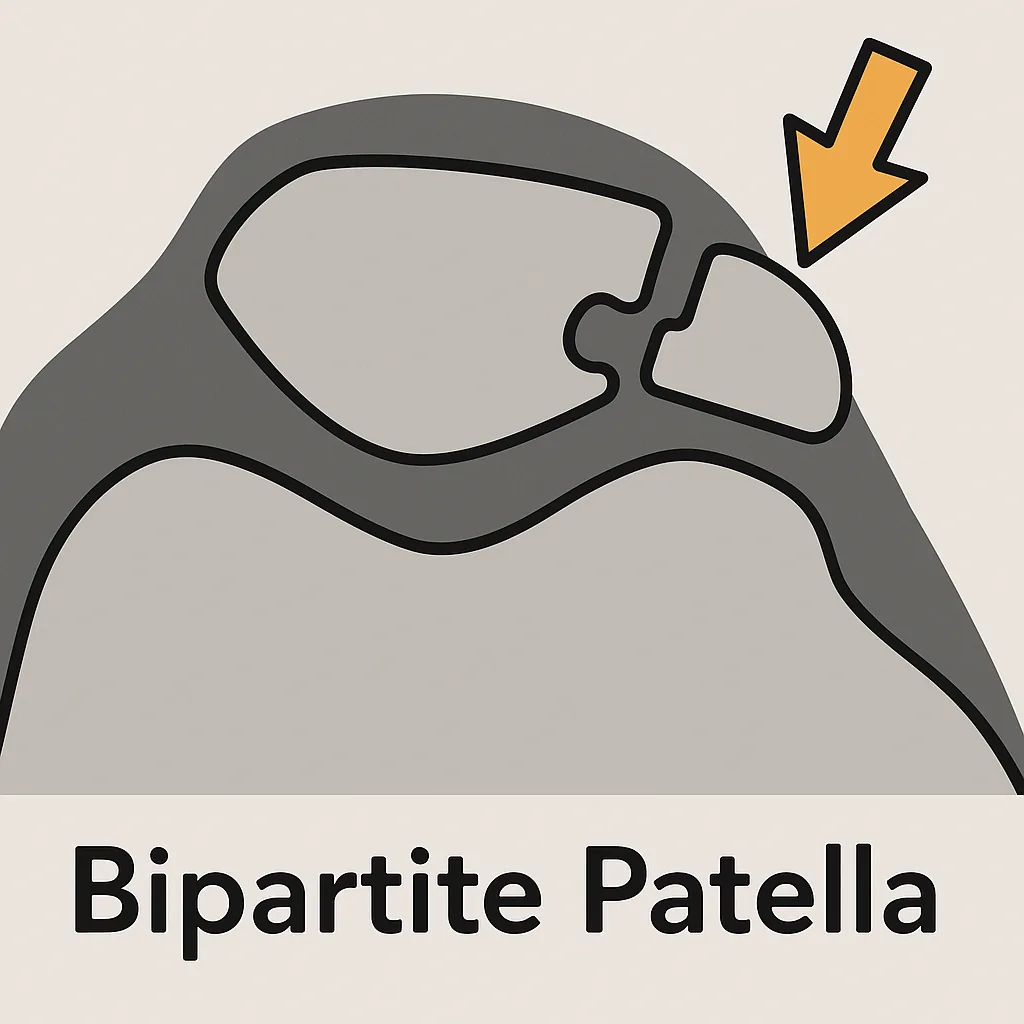
Bipartite patella is a condition in which the kneecap bone (patella) develops in two separate parts from birth and these parts do not fully fuse together. Normally, the patella is a single, solid bone. In this condition, the fusion process during bone development remains incomplete, leaving two distinct bone fragments.
It is generally a congenital condition. In most people, it is discovered incidentally and does not cause any symptoms throughout life. However, in some individuals—especially athletes—repetitive strain or direct blows can cause pain in the front of the knee. This pain may persist for a long time and require rest or treatment.
Bipartite patella is most often seen in both knees (bilateral), but it can also occur in only one knee. The prevalence in the general population is around 1–2%. Most cases are detected incidentally on knee X-rays taken for other reasons.
What Are the Symptoms of Bipartite Patella?
Painful bipartite patella most commonly presents with pain at the front of the knee, localized to the upper and outer part of the kneecap. The pain is usually directly over the bipartite area.
Patients often report that the pain increases during exercises that fully bend the knee, such as deep squats.
This condition is most frequently seen in elite athletes involved in sports that place high loads on the knee, such as ice skating and skiing. When questioned, patients with a history of pain often report having received a strong blow to the knee before their symptoms began. The trauma is usually a direct impact of the kneecap against a hard surface or object.
Following trauma, the fibrous tissue between the two parts of the patella may be damaged. If this tissue does not heal completely, chronic anterior knee pain can develop.
How Is Bipartite Patella Diagnosed?
Diagnosis begins with a physical examination. Tenderness and localized pain at the upper-outer part of the kneecap are typical findings.
An X-ray is used for a definitive diagnosis. On the X-ray, the patella is seen to have developed as two separate bone fragments.
In some cases, MRI (Magnetic Resonance Imaging) is performed. This method allows evaluation of the condition of the soft tissues and the fibrous tissue between the two bone parts. It also helps rule out other intra-articular knee injuries that may occur after trauma.
Bipartite Patella Treatment Methods
1. Non-Surgical Treatment (Conservative Approach)
The majority of bipartite patella cases can be treated without surgery. The following methods are commonly applied:
- Activity Modification: Temporarily avoiding sports and exercises that increase pain (such as deep squats, jumping, or kneeling on hard surfaces).
- Ice Application: Applied for 15–20 minutes after sports activities or when pain increases.
- Physical Therapy and Rehabilitation: Strengthening exercises for the quadriceps and hamstring muscles help reduce the load around the knee.
- Anti-inflammatory Medications: Can be used for short-term pain and swelling control under a doctor’s supervision.
- Injection Therapies: In chronic pain cases, ultrasound-guided corticosteroid or PRP (Platelet-Rich Plasma) injections can be effective for pain control.
2. Surgical Treatment
Surgery is considered only in patients whose pain does not improve despite prolonged conservative treatment and whose daily life or sports activities are significantly limited.
The surgical options include:
- Excision of the Extra Fragment: Removing the small bony fragment of the patella to eliminate the source of pain.
- Fibrous Tissue Debridement: Removing the damaged tissue between the two bone parts to promote healthy healing.
- Fixation of the Fragments: Rarely, especially in athletes, the two parts are fused together using screws or other fixation materials.
After surgery, weight-bearing can usually begin in a short time. The return-to-sport timeline depends on the specific procedure performed.
Conclusion and Recommendations
Bipartite patella is often detected incidentally and does not require treatment. However, anterior knee pain in athletes or after trauma may be related to this condition.
An accurate diagnosis is important to avoid unnecessary treatments and to shorten the return-to-sport period. If pain persists for a long time and affects sports performance, an orthopedic specialist should evaluate the condition.