Hip arthroscopy is a minimally invasive surgical technique used both to diagnose and treat a wide range of problems inside the hip joint.
During the procedure, a few small incisions are made around the hip and a specialized instrument called an arthroscope—equipped with a camera and light source—is inserted into the joint.
This allows the surgeon to view the inside of the hip in high magnification and treat multiple conditions in the same session, including labral tears, femoroacetabular impingement (FAI), cartilage damage, loose bodies, tendon problems, and more.
Compared to traditional open hip surgery, hip arthroscopy is performed through much smaller incisions.
This results in less postoperative pain and stiffness, faster recovery, and earlier return to daily activities and sports, making it a preferred option for many patients.
When Is Hip Arthroscopy Performed?
Hip arthroscopy can be used to diagnose and treat a variety of intra-articular (inside the joint) and extra-articular (outside the joint) hip conditions.
Intra-Articular Hip Disorders
- Femoroacetabular impingement (FAI): Abnormal bone overgrowth restricts hip motion and damages the labrum.
- Labral tears: Injury of the cartilage ring that surrounds and stabilizes the hip joint.
- Avascular necrosis (AVN): Early diagnosis and staging of hip bone necrosis.
- Loose bodies: Removal of cartilage or bone fragments floating inside the joint.
- Cartilage defects: Repair of damaged areas on the articular cartilage surface.
- Ligamentum teres injuries: Treatment of tears in the intra-articular ligament of the hip.
- Synovial disorders: Removal of inflamed or tumorous tissue from the joint lining.
- Septic arthritis: Diagnosis and surgical management of hip joint infections.
Extra-Articular Hip Disorders
- AIIS subspine impingement: Relief of bony impingement in the front of the hip.
- Capsular tears or instability: Repair of laxity or tears in the hip capsule.
- Iliopsoas tendon problems: Treatment of tendon irritation, snapping hip, or tendinitis.
- Gluteal tendon tears: Repair of tears involving the gluteus medius and minimus tendons.
- Trochanteric bursitis: Debridement or removal of inflamed bursa on the lateral hip.
- Ischiofemoral impingement: Addressing pain caused by narrowing between the femur and pelvis.
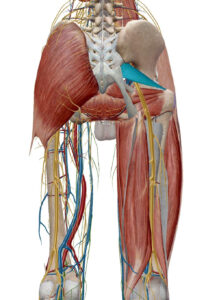
- Deep gluteal syndrome: Decompression of the sciatic nerve from surrounding soft tissues.
- Piriformis syndrome: Release or lengthening of the piriformis muscle to relieve nerve compression.
- Proximal hamstring tears: Surgical repair of hamstring tendon injuries near their attachment site.
When Is Hip Arthroscopy Not Recommended?
Hip arthroscopy is not suitable for every patient. In some cases, the success rate is low or the procedure is technically not possible.
- Advanced hip arthritis: In patients with severe cartilage loss and significant joint degeneration, hip arthroscopy is not effective. Hip replacement is usually preferred.
- Hip ankylosis: Complete loss of motion and fusion of the hip joint.
- Acetabular dysplasia (shallow hip socket): Arthroscopy alone is insufficient; however, it may be performed in combination with corrective surgeries such as periacetabular osteotomy (PAO).
- Severe joint contracture: Marked restriction of hip range of motion makes arthroscopy impossible.
- Severe osteoporosis: Poor bone quality reduces surgical safety.
- Protrusio acetabuli: Excessive inward displacement of the hip socket is a contraindication for arthroscopy.
Advantages of Hip Arthroscopy
Compared with open hip surgery, hip arthroscopy offers multiple advantages, making it particularly beneficial for young, active patients and athletes.
- Minimally invasive: Performed through incisions smaller than 1 cm, causing less trauma to surrounding tissues.
- Less pain: Postoperative pain is typically milder than after open procedures.
- Faster recovery: Patients return to daily life much sooner.
- Lower risk of stiffness: Small incisions help preserve joint mobility.
- Athlete-friendly: Allows quicker return to sports.
- Simultaneous diagnosis and treatment: Surgeons can visualize and treat intra-articular problems in the same session.
Recovery After Hip Arthroscopy
Recovery after hip arthroscopy varies depending on the procedure performed and the patient’s overall health. However, most patients recover faster than after traditional open hip surgery.
- Early phase (first days): Most patients can walk with crutches on the same day or the following day. Small incisions heal quickly.
- Crutch use: Weight-bearing is usually restricted for 2–4 weeks, depending on the procedure.
- Physical therapy: A critical part of recovery. Early, tailored rehabilitation programs help maintain muscle strength and restore range of motion.
- Return to daily activities: Most patients resume normal activities within 2–6 weeks.
- Return to sports: Athletes typically regain full performance within 3–6 months. More complex repairs, such as labral repair or bone reshaping (osteoplasty), may extend this timeline.
Regular follow-up, adherence to physiotherapy, and commitment to rehabilitation are key factors for a successful outcome after hip arthroscopy.
Risks of Hip Arthroscopy
Although hip arthroscopy is considered a safe and minimally invasive procedure, as with all surgical operations, certain risks exist. When performed by experienced surgeons on appropriately selected patients, the complication rate is very low.
- Infection: Rare due to the small incisions, but possible in any surgical procedure.
- Nerve or blood vessel injury: The nerves and vessels around the hip are close to the surgical field and may be at risk.
- Temporary numbness or tingling: May occur in the leg due to traction applied during surgery.
- Joint stiffness: Can develop if physical therapy is not started early.
- Incomplete pain relief: Particularly in patients with advanced cartilage loss or hip arthritis.
- Rare complications: Deep vein thrombosis (blood clot), heterotopic ossification (abnormal bone formation), and other uncommon issues.
Frequently Asked Questions About Hip Arthroscopy
What is hip arthroscopy?
It is a minimally invasive procedure in which the hip joint is visualized and treated using a camera (arthroscope) and specialized instruments through small incisions.
Which conditions can be treated with hip arthroscopy?
Most commonly femoroacetabular impingement (FAI), labral tears, cartilage damage, loose bodies, and tendon disorders.
Can hip arthroscopy be performed at any age?
It is typically performed in younger and middle-aged patients. In elderly patients with advanced arthritis, it is not effective.
How long is the recovery after hip arthroscopy?
Return to daily activities usually takes 2–6 weeks, while return to sports takes an average of 3–6 months.
Can I walk immediately after hip arthroscopy?
Most patients begin walking with crutches on the same or next day. Full weight-bearing is allowed within 2–4 weeks, depending on the procedure.
Will there be visible scars after hip arthroscopy?
Since the incisions are very small, scars are usually minimal and barely noticeable.
Is physical therapy necessary after hip arthroscopy?
Yes. Physical therapy and exercise are critical for restoring strength, motion, and ensuring surgical success.
Is hip arthroscopy risky?
Complication rates are low. However, rare risks include infection, nerve injury, or joint stiffness.
Can hip arthroscopy treat hip arthritis?
It may help in the early stages, but in advanced arthritis, hip replacement surgery is usually required.
Can a hip labral tear be repaired arthroscopically?
Yes. The torn labrum can be repaired with sutures or reshaped as necessary.
Does hip arthroscopy treat femoroacetabular impingement (FAI)?
Yes. Bony overgrowths can be shaved down to relieve impingement.
When can I return to work after hip arthroscopy?
For desk jobs, usually within 1–2 weeks; for physically demanding jobs, around 6–8 weeks.
When can I drive again after hip arthroscopy?
Typically after 2–4 weeks, once pain is controlled and reflexes return to normal.
Will I have pain after hip arthroscopy?
Some pain is expected in the first days, but it is generally well controlled with pain medications.
When can athletes return to competition after hip arthroscopy?
Professional athletes may require 4–6 months to return to full performance.
Can I run or play sports again after hip arthroscopy?
Yes, once full healing and rehabilitation are completed, most patients safely return to sports.
Is repeat surgery ever necessary?
Rarely, especially if there are advanced cartilage lesions or underlying structural problems such as dysplasia.
Will I eventually need a hip replacement after arthroscopy?
Patients with advanced arthritis may eventually require hip replacement, as arthroscopy provides limited benefit in such cases.
Is hip arthroscopy better than open surgery?
For properly selected patients, hip arthroscopy offers less pain, smaller incisions, faster recovery, and earlier return to activities compared to open surgery.
Where is hip arthroscopy performed in Istanbul?
It is performed by experienced orthopedic surgeons in fully equipped hospitals specializing in hip and sports medicine surgery.