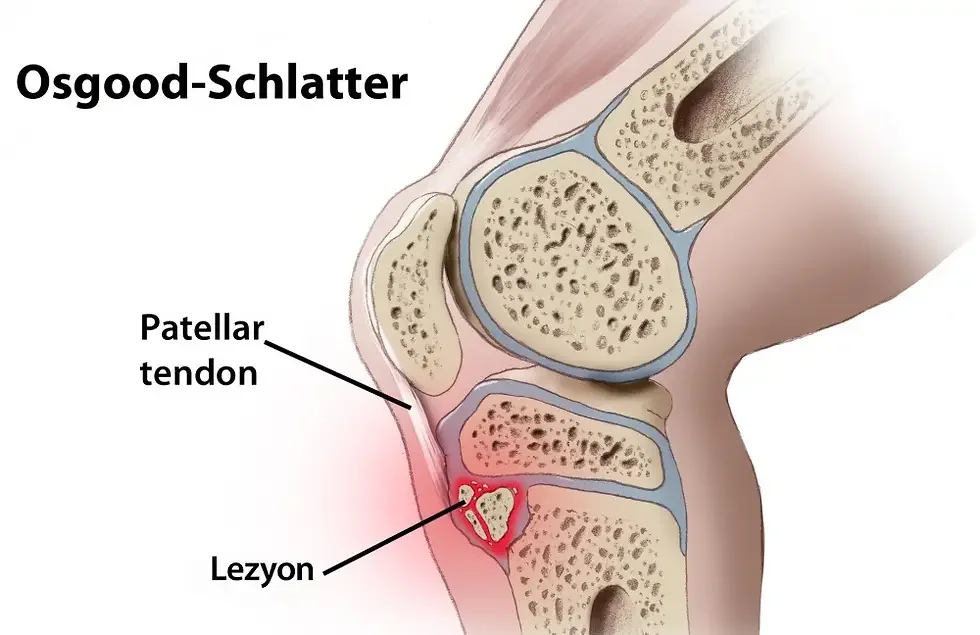
Osgood-Schlatter disease is a common knee condition that occurs in growing children and adolescents, particularly those who are physically active. It develops when repetitive stress on the patellar tendon — the tendon connecting the kneecap to the shinbone (tibia) — causes pain, tenderness, and sometimes a visible bony bump at the top of the shin.
Add us as a preferred source on GoogleSee our new articles higher in your searchesAddThis condition most often affects children aged 10 to 15 who participate in sports involving running and jumping, such as basketball, soccer, or volleyball. The pain is typically felt just below the kneecap and tends to worsen with physical activity while improving with rest.
In most cases, Osgood-Schlatter disease resolves on its own once the growth plates close and bone development is complete. However, in some children, symptoms may persist for several months and occasionally continue into adulthood. If knee pain remains after skeletal maturity, surgical treatment may be considered.
What Is Osgood-Schlatter Disease?
Osgood-Schlatter disease is an overuse injury that occurs in growing children and young athletes. It develops when the patellar tendon — which connects the kneecap (patella) to the upper part of the shinbone (tibia) — becomes inflamed at the point where it attaches to the bone. This inflammation of the growth plate is medically known as tibial tubercle apophysitis.
Because of repetitive stress or increased movement of the patellar tendon, especially in active individuals, the attachment site becomes irritated and inflamed. This leads to pain, swelling, and tenderness just below the kneecap. In some cases, excessive inflammation may cause new bone formation, resulting in a permanent bony bump on the front of the knee that can remain visible even after the symptoms resolve.
Osgood-Schlatter disease is bilateral in approximately 30% of cases, meaning that both knees may be affected. The condition was first described independently in 1903 by American orthopedic surgeon Robert Bayley Osgood and Swiss surgeon Carl B. Schlatter. Over time, the term “Osgood-Schlatter disease” became synonymous with tibial tubercle apophysitis.
Causes of Osgood-Schlatter Disease
Osgood-Schlatter disease typically develops during the adolescent growth spurt. During this rapid growth phase, the bones, muscles, and tendons do not lengthen at the same rate. The patellar tendon may remain relatively tight and short. As a result, the tendon repeatedly pulls on the growth plate at the upper part of the tibia, creating stress and inflammation in that area. This inflammation leads to the development of Osgood-Schlatter disease.
The condition is especially common among young athletes who participate in sports that involve frequent running and jumping, such as soccer, basketball, and track and field. In these athletes, the quadriceps muscle (front thigh muscle) often develops strength faster than flexibility. As the quadriceps tighten, they pull upward on the kneecap and the patellar tendon, increasing tension at the tendon’s attachment point on the tibial growth plate. This excess tension contributes to inflammation and pain characteristic of Osgood-Schlatter disease.
Which Athletes Are Most Commonly Affected?
- Soccer (Football)
- Basketball
- Volleyball
- Tennis
- Track and Field / Athletics
Symptoms of Osgood-Schlatter Disease
Pain: Pain occurs at the front of the knee, just below the kneecap, where the patellar tendon attaches to the shinbone. The discomfort typically worsens after sports or physical activity and improves with rest. In some cases, pain may persist for weeks or months, especially if activity continues without rest. Direct pressure on the area (for example, kneeling) increases the pain. The pain usually subsides once bone growth is complete at the end of adolescence.
Swelling: Swelling appears at the top of the shinbone, right where the patellar tendon attaches. This swelling results from inflammation of the growth plate. In some individuals, a permanent bony bump remains in this area due to extra bone formation during healing.
Diagnosis
Diagnosis is usually made through clinical examination and the patient’s history — especially in young athletes with knee pain below the kneecap. Knee X-rays may be taken to confirm the diagnosis and rule out other conditions.
Treatment for Osgood-Schlatter Disease
- Rest and activity modification
- Ice application to reduce inflammation
- Stretching exercises for the quadriceps and hamstring muscles
- Pain relief medication (only under medical supervision)
- Physical therapy to restore flexibility and muscle balance
Osgood-Schlatter Strap
A patellar tendon strap or knee band is often used as part of the treatment. This supportive band helps reduce tension on the patellar tendon, alleviates pain, and promotes healing.
PRP Treatment for Osgood-Schlatter Disease
In some professional youth athletes and elite junior players, conventional treatments may not fully control the pain caused by Osgood-Schlatter disease. In these resistant cases, ultrasound-guided PRP (Platelet-Rich Plasma) injections can be considered to reduce inflammation and promote healing at the site where the patellar tendon attaches to the tibia. PRP Treatment is performed under ultrasound guidance for precise application.
Osgood-Schlatter Surgery
Surgery for Osgood-Schlatter disease is rarely necessary. In most cases, once growth is complete and the growth plates have closed, pain gradually resolves. However, if pain persists after skeletal maturity, it is often due to small bone fragments irritating the patellar tendon. X-rays and MRI scans are used to evaluate the area and confirm the source of pain. If needed, surgery involves removing these bony fragments while preserving the attachment of the patellar tendon to the shinbone (tibia).
Is Osgood-Schlatter Surgery Risky?
- Infection
- Postoperative complications or delayed healing
Recovery Time After Osgood-Schlatter Surgery
Recovery time varies depending on the individual, but full recovery typically takes around 3–4 weeks after surgery.
Osgood-Schlatter Exercises
- Quadriceps stretches
- Knee extension and straightening exercises
How to Prevent Osgood-Schlatter Disease
- Plan sports activities carefully during the growth period.
- Always warm up before training and stretch afterward.
- Maintain good flexibility of the quadriceps and calf muscles.
- Avoid sudden increases in training intensity.
- Wear appropriate footwear and ensure adequate rest between activities.
- If pain develops below the kneecap, early intervention helps prevent progression.
Frequently Asked Questions About Osgood-Schlatter Disease
What is Osgood-Schlatter disease and how does it heal?
Osgood-Schlatter disease is a common knee condition in adolescents caused by repetitive stress on the patellar tendon. It usually improves with rest, ice, and physiotherapy.
What happens if I keep training with Osgood-Schlatter disease?
Continuing intense activity can increase pain and inflammation, prolonging recovery and potentially worsening the bony prominence below the kneecap.
At what age does Osgood-Schlatter disease occur?
It most often affects children aged 10 to 15, during periods of rapid growth.
Does Osgood-Schlatter prevent playing sports?
Sometimes temporary rest from sports is necessary. With proper treatment and supervision, most athletes can safely return to play.
Can Osgood-Schlatter affect both knees?
Yes. Around 30% of patients experience symptoms in both knees.
Why does swelling occur in Osgood-Schlatter disease?
Swelling develops due to inflammation and sometimes new bone formation at the top of the shinbone where the patellar tendon attaches.
Is Osgood-Schlatter visible on X-ray?
Yes. X-rays may show changes such as bone enlargement or small bone fragments near the tibial tubercle, though diagnosis is mainly clinical.
Is MRI necessary for diagnosis?
Usually not. MRI is only used in uncertain cases or when surgery is being considered.
Which exercises help Osgood-Schlatter disease?
Quadriceps stretching is the most important exercise. Improving muscle flexibility reduces tendon strain. Exercises should be done regularly and under guidance.
Can Osgood-Schlatter cause long-term problems?
In most cases, it resolves without complications. Some individuals may have a persistent bony bump that causes discomfort when kneeling.
Do knee straps or braces help?
Yes. Special Osgood-Schlatter straps relieve pressure below the kneecap and can reduce pain during activity.
Is PRP treatment effective for Osgood-Schlatter disease?
In resistant cases, especially in elite young athletes, ultrasound-guided PRP injections may help reduce inflammation and support healing. However, it is not necessary for every patient.
Is surgery ever required?
Rarely. If pain persists after growth is complete, surgical removal of the bony prominence may be needed.
Is Osgood-Schlatter surgery risky?
Risks are minimal but include general surgical complications such as infection or delayed wound healing.
Can Osgood-Schlatter recur?
Symptoms may flare up during growth, but the condition usually does not recur once the growth plates close.
Conclusion
Osgood-Schlatter disease is a common cause of knee pain and swelling in growing children, especially those who play sports. It results from overuse of the patellar tendon, which connects the kneecap to the shinbone. Symptoms usually worsen with physical activity and improve with rest. Treatment is mostly conservative, focusing on rest, ice therapy, stretching, and strengthening exercises. Surgery is rarely required and is only considered when other treatments fail. Most patients recover fully and return to normal activities without long-term issues.
If you would like to consult with Op. Dr. Utku Erdem Özer about persistent knee pain, please contact us or make an appointment for personalized evaluation.