
Plica syndrome is often an overlooked diagnosis, especially in patients with anterior knee pain. It occurs when the congenital plica folds within the knee joint become irritated. Normally as thin as paper, these structures can thicken three to four times due to repetitive friction and loading.
Add us as a preferred source on GoogleSee our new articles higher in your searchesAddA thickened plica rubs against the articular cartilage during knee movement, causing pain and, over time, damage to the cartilage. This condition typically presents with pain, tenderness, and a catching sensation in the front and inner part of the knee.
Although plica syndrome is most common in athletes, it can also occur in non-athletes. In patients with knee osteoarthritis, thickening of the medial plica may lead to discomfort in this region of the knee. In addition, in patients who have previously undergone knee surgery, especially in the months following anterior cruciate ligament (ACL) reconstruction, persistent pain and tenderness on the anteromedial side of the knee should raise suspicion for medial plica syndrome.
When plica syndrome is diagnosed by physical examination in patients presenting with anterior knee pain, most cases respond successfully to non-surgical treatments. With ultrasound guidance, injections can be directed specifically into the plica tissue rather than the joint cavity, and the success rate is very high. These injections typically include corticosteroid injections or Sanakin PRP injections. Although some patients may require two to three injections, most experience relief with a single injection.
If symptoms persist despite injections, a permanent solution can be achieved with arthroscopic plica surgery (removal of the plica).
What Is a Plica?
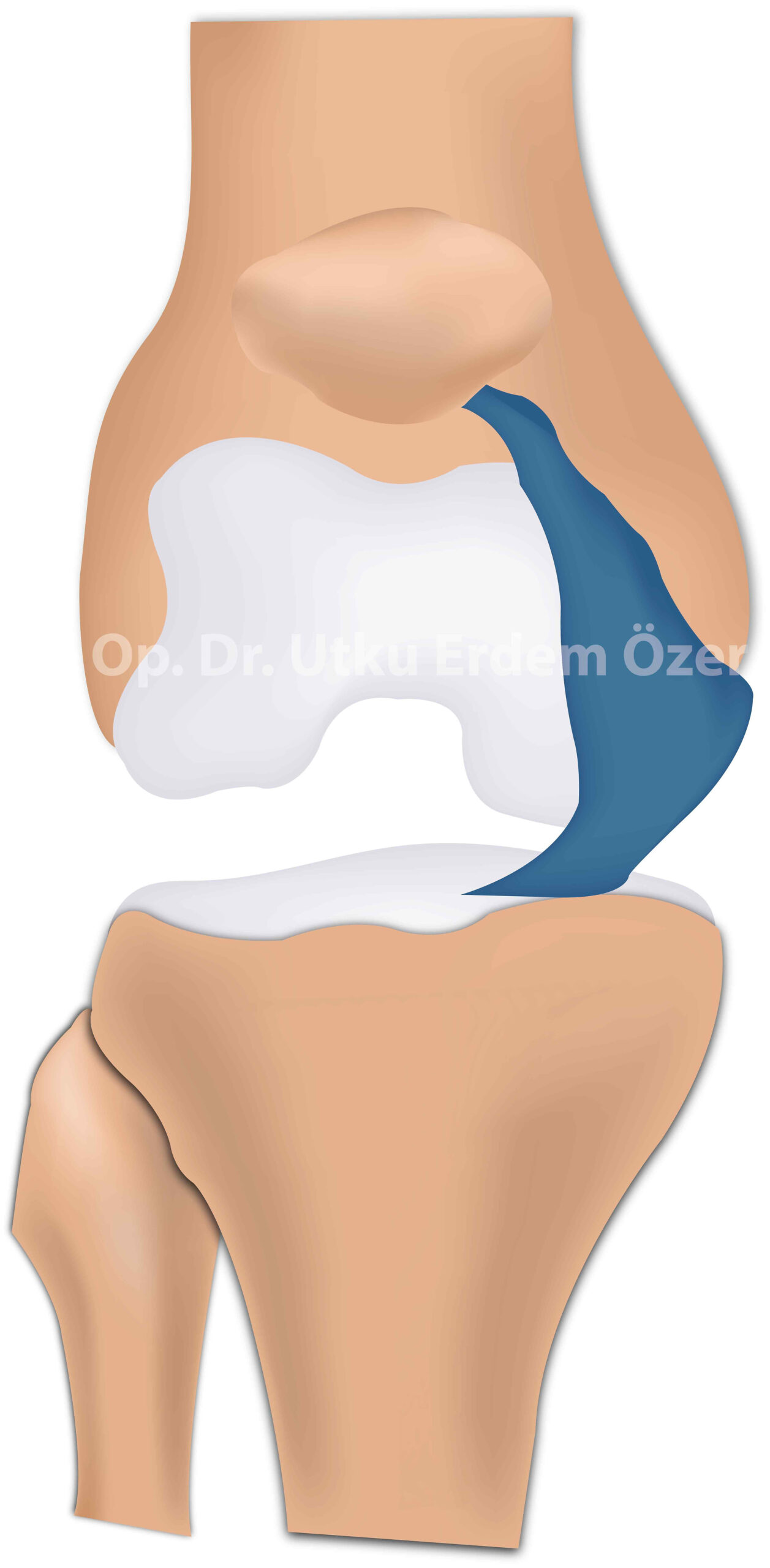
A plica is a thin, elastic fold of synovial tissue found inside the knee joint. These structures develop during embryonic growth in the womb, as the knee joint capsule is divided. Normally, plicae remain in the knee joint without causing any problems. However, in some cases, they may become inflamed, thickened, or irritated, leading to plica syndrome.
There are four different types of plicae in the knee: supramedial, lateral, mediopatellar, and infrapatellar plicae.
Each type is located in different regions of the knee joint, but the most common symptomatic type is the medial patellar plica. Plica syndrome occurs when these folds are compressed or rubbed during knee movements, resulting in pain and discomfort.
What Is Plica Syndrome?
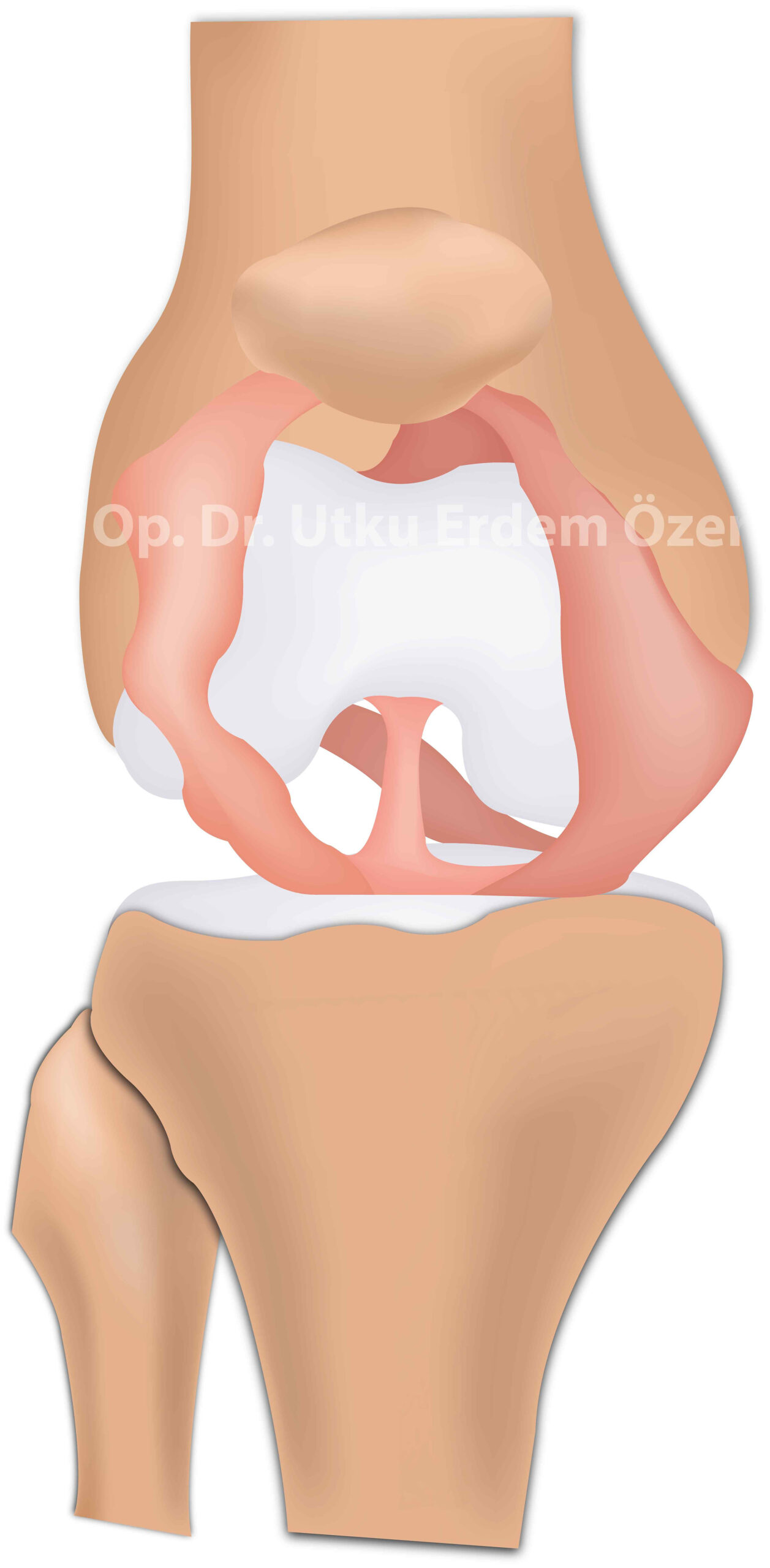
Plica syndrome is a condition in which a fold of synovial tissue normally present inside the knee becomes thickened due to injury or overuse, causing knee pain.
Diagnosis can sometimes be challenging, but if the source of the knee pain is plica syndrome, it can be treated effectively.
What Causes Plica Syndrome?
Plica syndrome develops when the synovial fold inside the knee becomes irritated.
The factors that may contribute to plica syndrome include:
- Overuse and repetitive movements: Often seen in athletes and physically active individuals. Repetitive knee motions such as running, cycling, or jumping can irritate the plicae.
- Trauma or injury: Direct blows to the knee or falls can inflame the plicae. Such trauma may cause the folds to become compressed or irritated.
- Knee joint abnormalities: Structural problems within the knee or conditions that affect its natural mechanics may contribute to plica syndrome by making the plicae more prone to impingement.
- Previous knee surgeries: Irritation or inflammation of the plicae may develop following surgical procedures. Postoperative inflammation of the synovial folds may trigger plica syndrome.
- Knee osteoarthritis: Conditions that cause inflammation in the knee joint, such as arthritis, may also inflame the plicae and lead to plica syndrome.
Symptoms of Plica Syndrome
Pain: The most characteristic symptom is pain in the anterior and medial knee. Unlike chondromalacia patella, the pain is not under the kneecap but on the inner side of the patella. Pain worsens when climbing stairs, bending the knee, or squatting. Prolonged sitting with the knee flexed may also aggravate the pain due to contact between the plica and the cartilage.
Swelling: Inflammation of the plica may cause joint swelling.
Clicking sounds: A clicking or snapping sensation may be felt when bending or extending the knee.
Palpable band: A firm, band-like structure may be felt on the inner side of the kneecap.
How Is Plica Syndrome Diagnosed?
After a detailed physical examination, suspicion of plica syndrome may arise. MRI imaging is often required for differential diagnosis. However, diagnosing plica syndrome with MRI can be difficult, as the folds may not always be clearly visible.
How Is Plica Syndrome Treated?
The treatment of plica syndrome varies depending on the patient’s symptoms and the condition of the plica tissue. The first step is to try non-surgical treatment methods. Surgical treatment is then considered.
Non-Surgical (Conservative) Treatment Methods for Plica Syndrome
When plica syndrome is diagnosed, most patients can be treated without surgery. Today, especially thanks to injections performed under ultrasound guidance, effective results can be obtained in a short time.
Ultrasound-Guided Plica Injection
The first preferred method in the treatment of plica is a direct injection into the thickened plica tissue. With this treatment applied under ultrasound guidance, the medication is delivered directly to the target area. This both increases the success rate and avoids unnecessary intra-articular interventions.
Corticosteroid or Sanakin (autologous PRP) is generally used in injections. While 2–3 sessions of injections may be required in some patients, in many patients the complaints may completely regress with a single injection.
Thanks to ultrasound-guided injection, both pain and the catching sensation caused by the plica are eliminated.
You can check this page for detailed information about needle treatments performed under ultrasound guidance.
Supportive Applications and Exercise Program
Following injection treatment or in patients in whom injection cannot be performed, the following conservative methods can be applied:
- Activity modification: It is recommended to avoid movements that strain the plica, such as squatting and going up and down stairs.
- Cold application: Ice applications of 15–20 minutes, 2–3 times a day, are effective in reducing swelling and pain.
- Medication: Pain- and inflammation-suppressing medications can provide symptom control in a short time.
- Physiotherapy:
- Hamstring stretches: Reduce pressure on the front of the knee.
- Quadriceps strengthening exercises: Support knee biomechanics and reduce plica irritation.
Treatment of Plica Syndrome with Cortisone Injection
In my own practice, I achieve quite good results with plica injections performed under ultrasound. The aim here is to inject cortisol into the thickened plica to thin the plica and prevent pain and catching.
To get more information about cortisone injections, you can click the link and read our article on cortisone injections.
Plica Syndrome Surgery
If non-surgical treatments do not help, the plica is removed with a closed surgery. This procedure is performed arthroscopically with a closed technique: two small incisions are made in your knee; a camera is placed through one incision and the image is reflected on the screen. Through the other incision, small surgical instruments are inserted. The plica is removed almost completely.
Watch the plica syndrome surgery I performed, which was quite successful.
Does Plica Syndrome Recur?
Plica syndrome can recur, especially when appropriate treatment is not applied or when the load on the knee continues. However, properly managed non-surgical treatment methods significantly reduce the risk of recurrence. Especially injections performed under ultrasound guidance help reduce pain by thinning the thickened plica. In this application, medication is given into or around the plica membrane to reduce edema and thickness. While a single session is sufficient in some patients, sometimes 2–3 injections may be required.
The success rate of this method is quite high, and in patients who respond to treatment, the likelihood of recurrence of plica syndrome is low. When applied together with appropriate exercise programs and reduction of loading, long-term comfort can be achieved. However, in cases that do not respond to non-surgical treatment, arthroscopic plica surgery provides a permanent solution.
What Is the Recovery Process Like After Plica Surgery?
The recovery process after plica surgery (arthroscopic plica excision) is generally rapid and uneventful. Since this surgery is performed with a closed method and minimal intervention to the soft tissues, patients can often return to their daily lives in a short time. Mild pain and swelling can be expected in the first few days. Return to daily activities is usually possible within one week.
The postoperative physiotherapy process is of great importance. To regain knee range of motion, strengthen the muscles, and achieve full function, physiotherapy usually starts from the 1st week. This process must be carried out under the supervision of a doctor and one-on-one with a physiotherapist. The exercise program should be individualized according to the patient’s condition, and loading should be increased gradually.
Most patients can return to normal activities within 3–6 weeks. In individuals who do sports, the time to return to the field varies depending on the type of sport performed but generally takes 6–8 weeks. With appropriate surgical technique and correct rehabilitation, the risk of recurrence of plica syndrome is quite low.
Conclusion
Plica syndrome occurs as a result of inflammation or irritation of the membranes called plica in the knee joint. It is generally seen in athletes and physically active individuals and causes pain in the front and inner midline of the knee. Plica syndrome is triggered during activities such as walking, running, and going up and down stairs.
In particular, plica refers to the thin, elastic membranes found in the knee joint. Plica syndrome occurs when these membranes in the knee are irritated due to overuse, trauma, or structural abnormalities. Its symptoms include pain in the front and inner side of the knee, swelling, sounds from the knee, and the feeling of a firm band-like structure.
Diagnosis is made by physical examination and sometimes MRI imaging. Treatment is carried out with rest, ice application, medication, and physiotherapy. Physiotherapy includes exercises to strengthen the quadriceps muscles and stretch the hamstring muscle group.
If non-surgical treatment methods are not effective, the plica is removed with a closed surgery. This procedure is performed with an arthroscopic technique and generally yields successful results.
Frequently Asked Questions About Plica Syndrome
What Is Plica Syndrome, What Does It Mean in the Knee?
Plica syndrome occurs as a result of inflammation or irritation of the membrane-like structures (plicae) located within the knee joint. This condition generally leads to pain in the front and inner part of the knee and a clicking sensation during movement.
Where Exactly Is the Plica Located in the Knee?
Plicae are located in various regions of the knee joint. The most problematic, the medial patellar plica, is located on the inner side of the kneecap and causes pain by rubbing against the femur bone.
How Is Plica Syndrome Recognized?
Pain on the inner side of the kneecap, especially during bending and squatting, a clicking sound, and sometimes a catching sensation in the knee are typical signs of this syndrome. The diagnosis is supported by physical examination and some special tests.
How Is Plica Syndrome Distinguished from a Meniscus Tear?
A meniscus tear usually causes pain over the joint line and leads to mechanical symptoms such as locking. In plica syndrome, the pain is on the inner side of the kneecap, more superficial and more diffuse.
Does Plica Syndrome Appear on MRI?
Thickened or edematous plicae can be seen on MRI imaging, but it may not always provide a clear diagnosis. It should be evaluated together with clinical examination because the plica can sometimes be overlooked on MRI.
What Is the Pain of Plica Syndrome Like?
The pain is generally dull and aching. It becomes more pronounced when going up and down stairs, squatting, or getting up after sitting for a long time. It is localized on the inner side of the knee and is sometimes accompanied by a clicking sensation.
Why Is Plica Syndrome Common in Athletes?
Sports such as running, cycling, and squats cause repetitive movements in the knee. These repetitions cause friction on the medial plica over time, leading to irritation and thickening, which triggers the development of the syndrome.
Does Plica Syndrome Resolve with Rest?
In the early stages, symptoms may improve with rest, activity restriction, and cold application. However, if there is thickened plica tissue, rest alone is not sufficient; physiotherapy and injections may be required.
Which Exercises Are Beneficial for Plica Syndrome?
Hamstring stretching exercises and strengthening the quadriceps muscles are very beneficial. These exercises regulate the alignment of the kneecap and reduce the pressure on the plica.
Does Physiotherapy Work for Plica Syndrome?
Yes, physiotherapy aimed at balancing the muscle groups around the knee is very effective. As muscle imbalances improve, friction on the plica decreases and symptoms are alleviated.
How Often Should Ice Be Applied for Plica Syndrome?
Ice should be applied 2–3 times a day, for 15–20 minutes each time. This method helps relieve pain by reducing inflammation and swelling.
Is a Cortisone Injection Effective for Plica Syndrome?
Yes. A cortisone injection into the thickened plica performed under ultrasound guidance reduces local inflammation, thins the tissue, and can eliminate complaints such as catching or noises in the knee.
Can Plica Syndrome Resolve Without Surgery?
Most patients can recover without surgery with an appropriate exercise program, physiotherapy, and injection treatments. However, arthroscopic surgery may come to the fore in resistant cases.
How Is Plica Syndrome Surgery Performed?
It is performed with an arthroscopic method, that is, closed surgery. Two small incisions are made in the knee, a camera and surgical instruments are inserted. The thickened plica tissue is removed. Same-day discharge is possible.
What Is the Recovery Process Like After Plica Syndrome Surgery?
After surgery, pain usually decreases significantly within 1–2 weeks. If supported by physiotherapy, it is possible to return to the previous activity level within 4–6 weeks.
Is Plica Syndrome Permanent?
It is not permanent if treated correctly. Plicae removed by surgery do not recur, and most patients achieve a symptom-free life. However, if underlying biomechanical disorders persist, similar problems may develop again.
Why Does Clicking Occur in the Knee in Plica Syndrome?
When the plica tissue thickens, it can rub against the femur during knee movement and create a clicking or catching sensation. This is especially evident during squatting and standing up.
Who Is Plica Syndrome Most Common In?
It is more common in young and active individuals, in people engaged in sports that involve intensive use of the knee, and especially in female athletes. The risk also increases in people with knee alignment problems.
When Should One See a Doctor for Plica Syndrome?
If knee pain lasts longer than 1–2 weeks, if there is pain and clicking during exercise or daily activities, or if swelling occurs in the knee, an orthopedic specialist should definitely be consulted.
What Happens If Plica Syndrome Progresses?
If not treated, the thickened plica can damage the joint surface and lead to cartilage wear. This can result in more serious patellofemoral problems.