Recurrent shoulder dislocations, especially in young and active individuals, can destabilize the shoulder joint and severely limit daily life and sports activities.
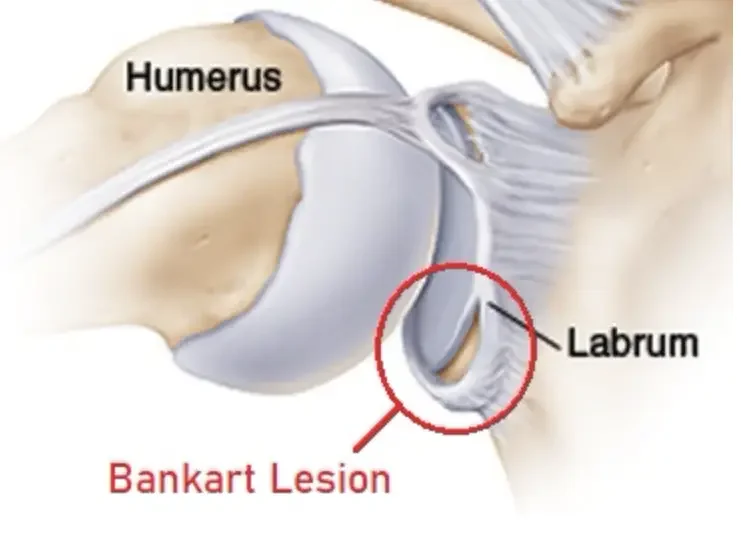
Add us as a preferred source on GoogleSee our new articles higher in your searchesAddThe underlying cause is usually the separation of the labrum (a cartilage-like ring around the glenoid) from the bone due to repeated dislocations. This injury is called a Bankart lesion.
A Bankart lesion means that one of the key stabilizing structures of the shoulder is damaged, and if left untreated, it predisposes the shoulder to further dislocations.
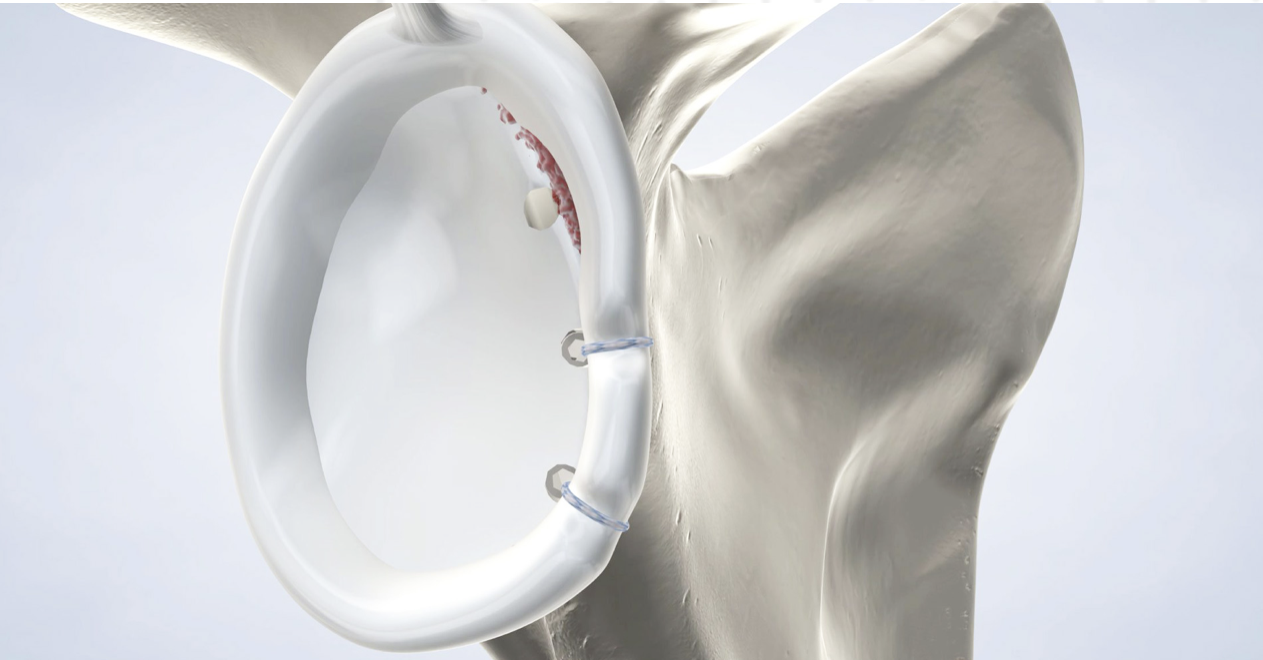
Arthroscopic Bankart repair is a minimally invasive surgery that reattaches the torn labrum to the glenoid with special anchors (suture anchors) placed inside the joint.
This procedure restores joint stability while preserving range of motion, allowing the patient to regain shoulder function.
What Is a Bankart Lesion?
A Bankart lesion is a specific soft tissue injury that occurs after shoulder dislocation.
The labrum, a ring-like structure that helps keep the humeral head centered in the glenoid socket, separates from the anteroinferior edge of the glenoid during anterior dislocations.
When this structure is torn, the shoulder becomes more prone to redislocation. Each subsequent dislocation weakens the labrum further.
Therefore, identifying and treating Bankart lesions is crucial in patients with recurrent shoulder instability.
What Is a Bony Bankart Lesion?
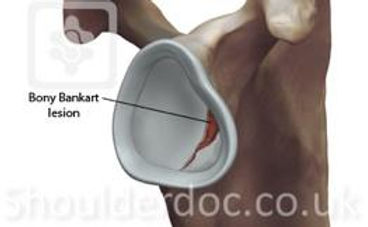
A bony Bankart lesion occurs when not only the labrum but also a fragment of the anteroinferior glenoid bone detaches during dislocation.
This type of injury alters the shape of the socket and reduces its surface area.
If the bone fragment involves more than 20–30% of the glenoid surface, shoulder stability is significantly compromised, and surgical treatment becomes necessary.
With arthroscopic fixation, the glenoid bone anatomy can be restored and the tendency of the shoulder to redislocate can be corrected.
What Is Bankart Repair?
Bankart repair is a surgical procedure to fix the Bankart lesion responsible for recurrent anterior shoulder dislocations.
The goal is to reattach the torn labrum to the glenoid bone.
- Using suture anchors, the labrum is re-fixed to its original position.
- The surgery is usually performed with an arthroscopic (minimally invasive) approach.
- This procedure decreases the risk of future dislocations, restores stability, and allows patients to regain shoulder function.
Who Is a Candidate for Bankart Repair?
Arthroscopic Bankart repair is recommended for patients with recurrent anterior shoulder instability.
Each dislocation causes progressive damage, making the shoulder more unstable.
Indications include:
- Two or more anterior shoulder dislocations,
- First dislocation with MRI evidence of a Bankart lesion or bone loss,
- Patients under 20 years of age with a Bankart lesion after the first dislocation (high recurrence risk),
- Athletes in contact sports or those using the shoulder intensively,
- Persistent feelings of instability or subluxation despite physiotherapy,
- MRI or arthroscopic confirmation of anteroinferior labral tear (Bankart lesion),
- Shoulder hyperlaxity with recurrent dislocations.
In the correct patient group, Bankart repair prevents redislocation, restores stability, and provides excellent functional outcomes.
Bankart Repair Combined with Remplissage
Arthroscopic Bankart repair is the standard surgical technique for recurrent anterior shoulder dislocation.
However, in some cases, when there is a large Hill-Sachs lesion (a defect on the humeral head) engaging with the glenoid, Bankart repair alone may not be sufficient.
In such cases, an additional procedure called remplissage is performed.
Remplissage involves filling the Hill-Sachs defect with the posterior capsule and infraspinatus tendon.
This creates a mechanical block against anterior translation of the humeral head.
- In patients with medium-to-large Hill-Sachs lesions, Bankart repair combined with remplissage significantly reduces the risk of recurrence.
Recovery After Bankart Repair
Recovery after arthroscopic Bankart repair is a structured process aimed at both tissue healing and regaining shoulder function.
The success of treatment largely depends on postoperative care and rehabilitation.
Phase 1: First 6 Weeks – Protection and Passive Movements
- The shoulder is immobilized with a sling.
- The goal is to allow the labrum to heal securely to the bone.
- Passive exercises are performed with the help of a physiotherapist.
- Elbow, hand, and wrist movements remain free.
Phase 2: Weeks 6–12 – Range of Motion and Muscle Control
- The sling is removed, and active shoulder exercises begin.
- Range of motion is gradually increased.
- Isometric and isotonic strengthening exercises are introduced.
- Daily activities can resume, but stress-loading movements are avoided.
Phase 3: Months 3–6 – Functional Return
- Shoulder function is largely restored.
- Return to non-contact sports may be possible from the 3rd month.
- Contact sports are usually allowed between 4–6 months, after careful assessment.
Who Is Not a Candidate for Bankart Repair Surgery?
Not every patient with a shoulder dislocation benefits from Bankart repair. In some situations, labrum repair alone is insufficient or not feasible. In such cases, other surgical methods (such as the Latarjet procedure) may be required.
Bankart repair alone is generally not suitable for the following patient groups:
- Patients with significant glenoid bone loss
(If more than 20% of the glenoid rim is missing, stability cannot be restored with soft tissue repair alone.)
- Patients with a large Hill-Sachs lesion on the humeral head
(If the defect causes engagement with the glenoid and anterior translation, additional support is required.)
- Patients with multiple tissue injuries from high-energy trauma
- Patients with marked hyperlaxity or connective tissue disorders
(In these cases, labral repair may not provide sufficient stability.)
- Patients with failed previous Bankart repair and recurrent dislocations
(Revision surgeries usually require different procedures.)
- Chronic cases where the labrum has completely degenerated or disappeared
(There may be no viable tissue left to reattach with sutures.)
- Patients unable to comply with postoperative rehabilitation
(Structured physiotherapy is essential for proper recovery.)
Each patient must be evaluated individually, considering age, activity level, bone quality, soft tissue condition, and sports background. The most appropriate surgical method should be decided by an orthopedic specialist.
Frequently Asked Questions About Arthroscopic Bankart Repair
What is arthroscopic Bankart repair?
It is a minimally invasive surgery to repair the torn labrum responsible for recurrent shoulder dislocation. The labrum is fixed back to the glenoid with special suture anchors.
What does a Bankart lesion mean?
A Bankart lesion refers to the separation of the anteroinferior labrum from the glenoid during a shoulder dislocation. This tear predisposes the shoulder to future dislocations.
Can the shoulder dislocate again after Bankart repair?
With proper patient selection and surgical technique, the risk of recurrence is quite low. However, a new traumatic event may still cause dislocation.
When is Bankart repair surgery necessary?
It is recommended in patients with two or more dislocations, MRI evidence of a Bankart lesion, or even after the first dislocation in patients under 20 years of age if a labral tear is detected.
Is Bankart repair performed with open or closed surgery?
It is most commonly performed arthroscopically (closed method). This technique uses small incisions and generally allows for a faster, more comfortable recovery compared to open surgery.
How long is the arm kept in a sling after Bankart repair?
The arm is usually immobilized in a sling for 4–6 weeks, during which only passive exercises are allowed.
Is physical therapy necessary after Bankart repair?
Yes. Physiotherapy is essential for successful recovery. It restores range of motion, muscle strength, and functional capacity.
Who is not suitable for Bankart repair?
Patients with severe glenoid bone loss, large Hill-Sachs lesions, or those with failed previous shoulder surgeries may not be candidates for isolated Bankart repair.
When can I return to sports after Bankart repair?
Return to non-contact sports is usually possible after 3 months. Contact sports are generally allowed between 4–6 months with physician and physiotherapist approval.
Will shoulder function be fully restored after Bankart repair?
With proper rehabilitation, stability is restored, and shoulder function is significantly regained in most patients.
Conclusion
Recurrent shoulder dislocations, if left untreated, can severely affect both daily life and athletic performance.
One of the main causes, the Bankart lesion, can be successfully treated with arthroscopic Bankart repair.
This minimally invasive surgery restores stability while preserving functional range of motion.
When performed at the right time and in the right patient group, it provides long-term successful outcomes.
The decision for surgery should be made by an orthopedic specialist after considering the patient’s age, activity level, number of dislocations, and imaging findings.