
De Quervain tendiniti, başparmağın hareketini sağlayan iki tendonun el bileği seviyesinde dar bir tünelden geçerken sürtünmeye maruz kalması sonucu oluşan bir çeşit tendon sıkışması ve iltihaplanması problemidir. El bileği ve başparmak hareketlerinde şiddetli ağrı, kavrama zorluğu ve şişlik en sık görülen belirtiler arasındadır.
Bizi Google’da tercih edilen kaynak yapınYeni yazılarımız aramalarınızda öne çıksınEkleHastalık; el bileğinin tekrarlayan zorlanmaları, iş veya spor aktiviteleri, hamilelik ve lohusalık dönemindeki hormonal değişiklikler ya da emzirme sırasında el bileğinin kötü pozisyonda tutulması gibi nedenlerle ortaya çıkabilir. Tedavide ilk basamakta istirahat, buz uygulaması ve ilaçlar yer alırken; ultrason eşliğinde tendon kılıfına yapılan enjeksiyonlar çoğu hastada oldukça başarılı sonuçlar sağlar. Şikâyetlerin devam ettiği ve enjeksiyondan fayda görülmeyen olgularda ise ameliyat ile sıkışan tendonlar serbestleştirilir.
De Quervain Tendiniti Nedir?
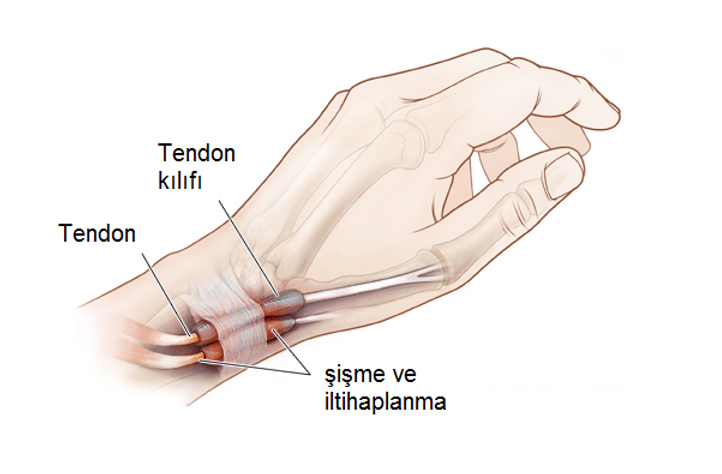
De Quervain tendiniti, el bileğinin başparmak tarafında yer alan birinci dorsal kompartman içindeki iki tendonun — abduktor pollicis longus (APL) ve ekstansor pollicis brevis (EPB) — dar bir tünel ya da kılıf içinde sıkışmasıyla ortaya çıkan bir hastalıktır. Tendonların normalde kayarak rahatça hareket etmesi gerekirken, kılıfın daralması veya tendonların kalınlaşması sonucunda sürtünme artar. Bu süreç, tendon kılıfında iltihaplanma (tenosinovit), ödem ve kalınlaşmaya yol açar.
Başparmak kökü seviyesinde hissedilen ağrı, hastalığın en belirgin özelliğidir. Ağrı genellikle kavrama, bileği döndürme veya tekrarlayan el hareketleri sırasında artar. İleri olgularda şişlik, başparmağa doğru yayılan ağrı ve bazen yakalama veya atlama hissi de görülebilir. Bu yakınmalar, hastanın günlük yaşamını zorlaştırarak kalem tutma, kavanoz açma veya telefon kullanma gibi basit aktivitelerde bile rahatsızlığa neden olabilir.
De Quervain Tendinitinin Sebebi Nedir?
De Quervain tendinitinin temel sebebi, başparmak tendonlarının el bileği kökü seviyesindeki dar tünel veya kılıf içinde tekrarlayan zorlanmalara maruz kalmasıdır. Bu zorlanmalar, tendon kılıfında iltihaplanmaya (tenosinovit), şişliğe ve daralmaya yol açar.
Hastalığa yol açabilen başlıca faktörler şunlardır:
- Tekrarlayıcı el hareketleri: Klavye, telefon, oyun konsolu, mutfak işleri veya bazı mesleklerde el bileğinin sürekli aynı hareketi yapması.
- Yeni doğum yapan kadınlar: Bebeği kucakta tutarken ya da emzirirken el bileğinin kötü pozisyonda kullanılması sık rastlanan nedenlerden biridir.
- Hormonal değişiklikler: Hamilelik ve lohusalık döneminde meydana gelen hormonal değişikliklerin tetiklediği tendon kılıflarında daralma, bu tabloya zemin hazırlayabilir.
- Travma veya kırıklar: El bileği kırıkları sonrası tendonlara binen yük artışı da De Quervain gelişimine neden olabilir.
- Hobiler ve sporlar: Tenis, golf veya raket sporları gibi el bileği ve başparmakta tekrarlayıcı zorlanmaya yol açan aktiviteler de risk faktörüdür.
De Quervain Tendinitinin Belirtileri Nelerdir?
De Quervain tendinitinde en belirgin bulgu, el bileğinin başparmak tarafında hissedilen ağrıdır. Bu ağrı yavaş yavaş başlayabileceği gibi, ani ve şiddetli de ortaya çıkabilir. Ağrı, bazen başparmağa veya kola doğru yayılabilir.
Hastalığın diğer belirtileri şunlardır:
- Kavrama ve döndürme sırasında artan ağrı: Kavanoz açma, kalem tutma, telefon kullanma veya bebek taşıma gibi aktivitelerde belirginleşir.
- Şişlik: Başparmak kökü çevresinde şişlik olabilir. Bazı olgularda içi sıvı dolu kist (kistik higroma) gelişebilir.
- Yakalama ve atlama hissi: Tendonların sıkıştığı bölgede takılma veya sürtünme hissi yaşanabilir.
- Yumruk yapmada güçlük: Ağrı ve şişliğe bağlı olarak parmakların kapanması zorlaşır.
- Uyuşma: Başparmak ve işaret parmağında uyuşma, sinirin yakın komşuluğu nedeniyle görülebilir.
De Quervain Tendinitinin Tanısı Nasıl Konulur?
De Quervain tendinitinin tanısı genellikle klinik muayene ile konur. En sık kullanılan test Finkelstein testidir. Bu testte:
- Hastadan başparmağını avuç içine katlaması istenir.
- Diğer dört parmak başparmağın üzerine kapatılarak yumruk yapılır.
- El bileği küçük parmak tarafına (ulnar deviasyon) doğru bükülür.
- De Quervain hastalığı olan kişilerde bu manevra sırasında başparmak kökü bölgesinde keskin bir ağrı oluşur.
Fizik muayene bulguları tanı için çoğunlukla yeterlidir. Görüntüleme yöntemleri (ultrason veya MR) nadiren, başka bir hastalık şüphesi olduğunda kullanılır.
De Quervain Tendinitinin Tedavisi Nasıldır?
Tedavide temel amaç, tendon kılıfındaki iltihabı azaltmak ve ağrıyı kontrol altına almaktır.
1. Ameliyat dışı tedavi yöntemleri:
- İstirahat ve aktivitelerin düzenlenmesi: El bileğinin zorlayıcı hareketlerden korunması.
- De Quervain Tendinitinde Atel Kullanımı: Başparmak ve el bileğini sabitleyen ateller (splint), özellikle erken dönemde ağrıyı azaltmak ve tendonların dinlenmesini sağlamak için kullanılabilir. Ancak atel tek başına hastalığı tedavi etmez. Şikâyetleri hafifletici bir yöntemdir ve genellikle ilaç veya enjeksiyon tedavisiyle birlikte önerilir. Uzun süreli ve tek başına atel kullanımı, kalıcı çözüm sağlamaz.
- Buz uygulaması: Özellikle ağrının ilk başladığı günlerde şişlik ve yangıyı azaltmak için önerilir.
De Quervain Tendinitinde Buz Masajı Nasıl Yapılır?
Küçük bir plastik bardağa su doldurun ve tamamen donana kadar dondurucuda bekletin.
Donduktan sonra bardağı dondurucudan çıkarın ve bardaktan kısmen çıkarılmış buz yüzeyini ağrılı bölgeye uygulayın. (Bardağı tutarak buzun açık kısmıyla masaj yapılır.)
Buzu el bileğinin başparmak tarafındaki ağrılı bölgeye dairesel hareketlerle sürün.
Masaj süresi 5–7 dakikayı geçmemelidir.
Masaj bittikten sonra bölgeyi kurulayın ve dinlenmeye bırakın.
Ağrı kesici ve antiinflamatuar ilaçlar: Doktor önerisiyle kullanılabilir.
2. De Quervain Tendinitinin Tedavisinde Ultrason Altında Kortizon Enjeksiyonu
De Quervain tendinitinde ameliyat dışı tedaviler arasında en etkili yöntemlerden biri ultrason eşliğinde kortizon enjeksiyonudur. Ultrason sayesinde tendonlar net olarak görüntülenir ve enjeksiyon doğrudan tendonun içine değil, tendon kılıfına uygulanır. Bu sayede işlem çok daha güvenli hale gelir ve komplikasyon riski minimaldir.
Bu tedavi çoğu hastada ağrı ve şişliğin hızla azalmasını sağlar ve günlük yaşama dönüşü kolaylaştırır. Başarı oranı yüksektir, ancak etkinliğin süresi kişiden kişiye değişebilir. Bazı hastalarda uzun süreli rahatlama sağlarken, bazı olgularda şikâyetler zamanla tekrarlayabilir.
De Quervain Tendinitinde Ne Zaman Ameliyat Gerekir?
De Quervain tendinitinde ilk tercih her zaman ameliyat dışı tedavilerdir. Ancak;
- İstirahat, atel, ilaç ve buz uygulaması,
- Ultrason eşliğinde yapılan kortizon enjeksiyonları
gibi yöntemlere rağmen şikâyetler devam ediyorsa veya ağrı günlük yaşamı ciddi şekilde kısıtlıyorsa cerrahi tedavi gündeme gelir. Ameliyat, konservatif tedavilerden fayda görmeyen hastalarda kalıcı çözüm sağlayan yöntemdir.
De Quervain Ameliyatı Nasıl Yapılır?
Ameliyat, genellikle bölgesel (lokal) veya genel anestezi altında gerçekleştirilir. El bileğine turnike uygulanarak ameliyat sahasının daha net görülmesi sağlanır. Cerrahi sırasında başparmak tendonlarının geçtiği dar kompartman açılır. Bu işlem tendonların rahat hareket etmesini sağlar ve sıkışmayı ortadan kaldırır. Ameliyat bölgesinden geçen ve başparmağın hissini sağlayan sinir dikkatle korunur. Operasyon süresi genellikle kısadır ve aynı gün taburculuk mümkündür. İyileşme döneminde kısa süreli bandaj veya atel uygulanabilir. Hastaların çoğu, cerrahi sonrasında ağrılarından kalıcı olarak kurtulur ve günlük aktivitelerine geri dönebilir.
De Quervain Ameliyat Sonrası İyileşme Süreci
De Quervain ameliyatından sonra iyileşme genellikle hızlıdır. Hastaların çoğu aynı gün taburcu olabilir.
- İlk günler: Ameliyat bölgesi kısa süreli bandaj veya atel ile korunur. Elin yüksekte tutulması şişliği azaltır.
- 1–2 hafta: Bandaj çıkarılır, dikişler eriyen tipte olduğu için ayrıca alınmasına gerek yoktur. Günlük basit aktiviteler kısıtlı ağrı ile yapılabilir.
- 2–4 hafta: El bileği ve başparmak hareketleri giderek rahatlar. Kavrama gücü artmaya başlar.
- 4–6 hafta: Hastaların çoğu işine ve normal yaşamına dönebilir. Ağrı büyük oranda kaybolur.
Ameliyat sonrası Fizyoterapi çoğu zaman gerekli değildir. Ancak uzun süreli şikâyeti olan bazı hastalarda, el bileği egzersizleri iyileşme sürecini hızlandırabilir.
De Quervain Tendiniti Hakkında Sık Sorulan Sorular
De Quervain tendiniti nedir?
De Quervain tendiniti, başparmak hareketini sağlayan tendonların el bileği kökü seviyesinde kılıf içinde sıkışması sonucu oluşan ağrılı bir rahatsızlıktır.
De Quervain tendiniti kimlerde daha sık görülür?
El bileğini tekrarlayıcı şekilde kullanan kişilerde, yeni doğum yapan kadınlarda, emzirme döneminde ve bazı meslek gruplarında daha sık görülür.
De Quervain tendinitinin en önemli belirtisi nedir?
En belirgin bulgu, başparmak tarafında el bileği kökünde ağrıdır. Ağrı kavrama, döndürme ve başparmak hareketleriyle artar.
De Quervain tendiniti tanısı nasıl konur?
Tanı çoğunlukla fizik muayene ile konur. En sık kullanılan test Finkelstein testidir; bu manevra sırasında başparmak kökü bölgesinde ağrı oluşur.
De Quervain tendiniti için MR çekmek gerekir mi?
Çoğu zaman gerekmez. Tanı klinik muayene ile konur. MR veya ultrason sadece farklı hastalıklar şüphesinde kullanılabilir.
De Quervain tendiniti tedavi edilmezse ne olur?
Tedavi edilmeyen olgularda ağrı giderek artar, kavrama gücü azalır ve günlük yaşam aktiviteleri zorlaşır.
De Quervain tendinitinde ameliyat dışı tedavi yöntemleri nelerdir?
İstirahat, atel kullanımı, buz masajı, ilaç tedavisi ve ultrason eşliğinde kortizon enjeksiyonu ameliyat dışı yöntemlerdir.
De Quervain tendinitinde kortizon enjeksiyonu güvenli midir?
Evet, enjeksiyon ultrason altında tendon kılıfına yapıldığı için tendona zarar verme riski minimaldir ve çoğu hastada oldukça etkilidir.
De Quervain ameliyatı nasıl yapılır?
Ameliyatta tendonların geçtiği dar kompartman açılır, tendonların serbestçe hareket etmesi sağlanır. İşlem genellikle kısa sürer ve aynı gün taburcu olunabilir.
De Quervain ameliyatından sonra iyileşme süresi ne kadardır?
Çoğu hasta 4–6 hafta içinde günlük aktivitelerine döner. Dikişler genellikle eriyen tiptedir, ayrıca alınmasına gerek yoktur.
De Quervain tendiniti kendiliğinden geçer mi?
Genellikle hayır. Hafif olgular istirahatle bir süre rahatlayabilir ama çoğu hastada şikâyetler devam eder. Kalıcı çözüm için enjeksiyon veya gerekirse cerrahi tedavi gerekir.
De Quervain tendiniti için egzersiz önerilir mi?
Akut dönemde egzersiz ağrıyı artırabilir. Tedavi sonrası iyileşme sürecinde hafif germe ve güçlendirme egzersizleri doktor kontrolünde uygulanabilir.
De Quervain ameliyatı sonrası iz kalır mı?
Ameliyat kesisi genellikle küçük olur ve zamanla silikleşir. Çoğu hastada estetik açıdan rahatsız edici bir iz kalmaz.
De Quervain tendiniti atel ile düzelir mi?
Atel, tendonları dinlendirdiği için şikâyetleri hafifletebilir ancak hastalığı tamamen ortadan kaldırmaz. Tek başına kalıcı çözüm sağlamaz, diğer tedavilerle birlikte uygulanır.
De Quervain tendiniti ne kadar sürede iyileşir?
Tedaviye yanıt kişiden kişiye değişir. Kortizon enjeksiyonu sonrası çoğu hastada şikâyetler haftalar içinde belirgin şekilde azalır. Ameliyat olan hastalar genellikle 4–6 hafta içinde günlük yaşamlarına dönebilir.
De Quervain tendiniti neden yeni doğum yapan kadınlarda sık görülür?
Yeni doğum yapan kadınlarda bebeği kucakta tutarken veya emzirirken el bileği çoğunlukla kötü pozisyonda kalır. Ayrıca hamilelik ve lohusalık dönemindeki hormonal değişiklikler tendon kılıflarında daralmaya yol açar. Bu iki faktör bir araya geldiğinde De Quervain tendiniti gelişme riski artar.
De Quervain tendiniti tekrarlayabilir mi?
Evet, özellikle risk faktörleri devam ediyorsa (tekrarlayıcı el bileği kullanımı, yanlış pozisyon, zorlayıcı aktiviteler) hastalık tekrar ortaya çıkabilir. Ancak ultrason eşliğinde yapılan enjeksiyonlar ve gerekirse cerrahi tedavi sonrasında tekrarlama riski oldukça düşüktür.