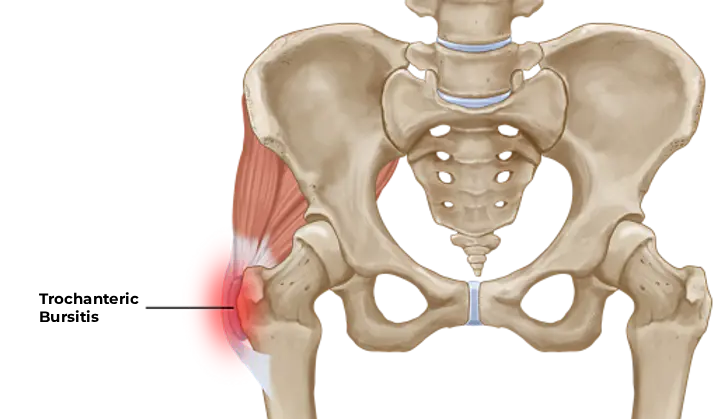
Trochanteric bursitis, also known as hip bursitis, is a condition that causes pain on the outer side of the hip, directly over the bony prominence called the greater trochanter. The pain typically worsens during activities such as walking, climbing stairs, or lying on the affected side. It is one of the conditions grouped under greater trochanteric pain syndrome (GTPS), the broader term for pain on the outer side of the hip.
Add us as a preferred source on GoogleSee our new articles higher in your searchesAddThe most common cause of trochanteric bursitis is tension or shortening of the iliotibial (IT) band. This is also referred to as proximal IT band friction syndrome. A tight IT band rubs continuously against the trochanteric bursa, leading to inflammation. Another contributing factor may be lying on hard surfaces for prolonged periods, which puts pressure on the outer hip.
A hallmark symptom of trochanteric bursitis is localized tenderness on the outside of the hip, in addition to lateral hip pain. Diagnosis is usually made through a detailed physical examination. In some cases, imaging tests such as MRI scans may be used to confirm the diagnosis and rule out other hip problems.
Treatment for trochanteric bursitis is typically non-surgical. The main approaches include:
- IT band stretching exercises to reduce tension and friction
- Ultrasound-guided injections to relieve pain and inflammation
Surgery is rarely required. In severe or persistent cases, the procedure can be performed using arthroscopic (minimally invasive) surgery, which allows for faster recovery and less postoperative discomfort.
What Is Trochanteric Bursitis?
As in every joint, there are fluid-filled sacs called bursae around the hip joint. The function of the bursae is to absorb shocks coming to the joint and to protect it against trauma. Normally, the bursa structures are as thin as paper, but when their function begins to deteriorate for some reason, they become inflamed, swell, thicken, enlarge, and start to cause pain.
There are two major bursae in the hip joint. One of them is the trochanteric bursa. The other is the iliopsoas bursa, which is located deeper and on the inner side of the hip.
The trochanteric bursa is located on the outer part of the bony structure called the greater trochanter, which is the part of the femur close to the hip joint. The trochanteric bursa is positioned between the gluteus maximus muscle and the iliotibial band. The tendon of the gluteus medius muscle attaches exactly at this point.
Trochanteric bursitis usually develops as a result of overuse injuries, repetitive movements, or prolonged pressure. Imbalances in the hip muscles and obesity are other factors that may trigger this condition. Diagnosis is made through orthopedic examination and imaging methods such as MRI and ultrasound. Early initiation of treatment is important because if left untreated, the pain may become chronic and significantly limit daily activities.
- Bursa inflammation causes pain in the hip area.
- Repetitive movements and overuse may trigger this condition.
- Unsupported or hard-soled shoes may increase the load on the hip and trigger bursitis.
- Activities such as walking on uneven ground and going up and down stairs for long periods put extra pressure on the bursa and increase the pain.
- Orthopedic examination and MRI and ultrasound imaging are used to make the diagnosis.
Starting treatment early can prevent the development of chronic pain and help the person maintain mobility. If left untreated, pain may increase in the long term and significantly limit daily activities. In addition, untreated cases and incorrect movements may cause more serious orthopedic problems in the future. Therefore, it is recommended to consult an orthopedic specialist when symptoms are noticed.
Sometimes, in conditions such as tendinosis or tendon tears of the gluteus medius tendon, the pain occurs in the same area and can be confused with trochanteric bursitis. If you would like to learn more about this topic, you can click on the gluteus medius pain link.
What Causes Trochanteric Bursitis?
The swelling and inflammation of the trochanteric bursa around the hip joint and the resulting pain may have several possible causes listed below:
- The IT band shortens and begins to compress the bursa in the trochanteric region. Inflammation starts in the compressed bursa, leading to pain.
- After a fall, when the structure of the bursa begins to deteriorate.
- As a result of repetitive microtrauma, as seen in cyclists.
- In those who lie on a hard surface on their side for long periods.
- Leg length discrepancy and structural deformities in the hip region.
- Previous hip surgeries or traumas.
What Are the Symptoms of Trochanteric Bursitis – Hip Bursitis?
Trochanteric bursitis occurs when the bursa located over the trochanter, a large bony prominence in the hip region, becomes inflamed. The symptoms of this condition are:
- Pain: Pain felt over the bony prominence on the outside of the hip, which may wake the patient at night when lying on it, during hip-stretching movements such as sitting cross-legged, and after activities like long walks or cycling.
- Tenderness: The surface over the bone on the outer side of the hip gradually becomes tender.
- Limping: Especially if the patient lies on the affected side at night, upon waking in the morning, limping may be seen during the first few minutes. More often in untreated cases, due to persistent pain, patients may visit the doctor with the complaint of limping.
If you would like to contact us regarding hip bursitis, you can reach us through any of the communication channels on our contact page.
How Is Trochanteric Bursitis Diagnosed?
Pain and tenderness on the outer side of the hip during physical examination suggest trochanteric bursitis. Sometimes, however, making the diagnosis may not be easy. In order to distinguish it from disorders of the gluteus medius tendon located in the same region, MRI imaging is required.
What Does the MRI Image of Trochanteric Bursitis Look Like?
Trochanteric bursitis MRI image
On MRI, trochanteric bursitis is usually seen with signs of swelling and inflammation near the hip joint. Bursitis typically appears on MRI as fluid accumulation in the affected area.
Where Does Trochanteric Bursitis Pain Radiate?
The pain of trochanteric bursitis usually radiates to the outer side of the hip. This pain makes activities such as walking, climbing stairs, or sitting for long periods difficult. Sometimes the pain spreads down the leg and may gradually increase while lying at night.
How Is Trochanteric Bursitis – Hip Bursitis Treated?

The two most important approaches in the treatment of trochanteric bursitis are the regular application of IT band stretching exercises and ultrasound-guided cortisone and Sanakin PRP injections. These two methods are extremely effective in controlling the pain on the outer side of the hip and preventing recurrence of the disease.
The first step of treatment is to limit activities that increase pain. Especially lying on the hip, climbing stairs, or standing for long periods may intensify the pain. Therefore, patients are strongly advised not to lie on the painful hip.
For pain control, non-steroidal anti-inflammatory drugs (NSAIDs) recommended by a doctor can also contribute to treatment.
Trochanteric Bursitis Exercises
The main goals in the physiotherapy of trochanteric bursitis are:
- IT Band Stretching: The tightness of this connective tissue, which extends from the outer part of the hip to the knee, may put pressure on the trochanteric bursa and increase inflammation. Regular IT band stretching exercises reduce this pressure and support healing.
- Strengthening of Gluteal Muscles: Strengthening the gluteus medius, minimus, and maximus muscles corrects hip mechanics and reduces the load on the trochanteric region.
Exercise programs carried out with the supervision of a physiotherapist are very effective in both reducing pain and minimizing the risk of recurrence.
Trochanteric Bursitis Stretching
The treatment of trochanteric bursitis often starts with the iliotibial (IT) band. Stretching this band helps reduce tension on the hip and relieve pain. You can learn how to properly stretch the IT band by watching the video below.
Ultrasound-Guided Cortisone Injection in the Treatment of Trochanteric Bursitis
Ultrasound-guided cortisone injections are one of the most effective methods in the treatment of trochanteric bursitis. With imaging guidance, the injection is applied directly into the bursa, so the drug reaches the inflamed area precisely. This method usually provides rapid pain relief; in some cases, relief may last for months, or even permanently.
If bursitis recurs, the injection can be repeated. However, because cortisone carries a risk of damaging surrounding soft tissues, the number of injections must be carefully limited.
Physical Therapy in Trochanteric Bursitis
Trochanteric bursitis, also known as hip bursitis, is a condition that responds well to physical therapy. Physical therapy helps reduce pain, strengthen muscles, and improve joint mobility. This treatment method facilitates the patient’s return to daily activities and accelerates the recovery process.
Trochanteric Bursitis Surgery

If trochanteric bursitis cannot be treated with non-surgical methods, surgery becomes an option.
Currently, the treatment of trochanteric bursitis is performed with closed surgery, that is, arthroscopically. With the help of a camera, bursitis is identified and the damaged bursa tissue is removed. Since no procedure is performed on the joint itself, the patient returns to daily activities within 1–2 weeks after the surgery.
Injection in Hip Bursitis Treatment – Its Importance
Injection in the treatment of hip bursitis helps reduce inflammation and relieve pain. Injections usually contain anti-inflammatory substances such as corticosteroids or PRP (platelet-rich plasma).
This treatment method is preferred in patients who do not respond to other treatments or who have severe symptoms. We evaluate the patient’s condition, determine the most appropriate treatment options, and explain the role of the injection in the treatment process to our patients.
How Can Trochanteric Bursitis Be Prevented?
The most effective way to prevent trochanteric bursitis is to reduce the stress on the iliotibial band (IT band). For this, IT band stretching exercises should be performed regularly. However, stretching alone is not sufficient; essentially, the gluteus medius and gluteus maximus muscles need to be strengthened. The stronger these muscles are, the less load is placed on the IT band, and the lower the risk of irritation of the trochanteric bursa.
Especially in athletes, weakness of the hip muscles causes the IT band to rub against the trochanteric bursa. Strong hip muscles increase pelvic stability and balance the hip’s load-bearing capacity. Warm-up before exercise and stretching afterwards help maintain this muscle balance. Ideally, one should receive training under the supervision of a physiotherapist with a personalized hip strengthening and IT band stretching program.
Does Trochanteric Bursitis Recur?
Yes, trochanteric bursitis is a condition that carries a risk of recurrence if not treated properly or if the underlying causes are not corrected. Especially the persistence of weak gluteus medius and gluteus maximus muscles, insufficient stretching of the IT band, or returning to sports with incorrect techniques can cause bursitis to flare up again.
Related: Hamstring Muscle Tear Treatment
Stopping treatment completely after the pain disappears is a common mistake. However, strengthening the hip muscles and continuing IT band stretching exercises regularly are essential. With proper treatment and preventive approaches, trochanteric bursitis can be controlled and the frequency of recurrence can be significantly reduced.
Frequently Asked Questions About Trochanteric Bursitis
What is trochanteric bursitis?
Trochanteric bursitis is the inflammation of the fluid-filled sac called the trochanteric bursa located on the outer part of the hip bone. This condition usually causes pain on the outside of the hip.
What are the symptoms of trochanteric bursitis?
Trochanteric bursitis manifests with pain on the outer side of the hip, tenderness, and difficulty while walking. Pain may increase especially when climbing stairs or lying on the affected side.
How is trochanteric bursitis diagnosed?
Diagnosis begins with physical examination. The doctor evaluates tenderness over the hip. If necessary, ultrasound or MRI imaging is used to clarify the diagnosis.
How is trochanteric bursitis treated?
The first step in treatment is rest and application of ice. If needed, cortisone or PRP injections and physical therapy exercises are also used.
What happens if trochanteric bursitis is not treated?
If left untreated, it may become chronic, causing hip pain and limitation of movement. This situation may negatively affect daily life.
What causes hip bursitis?
Hip bursitis usually develops due to overuse, incorrect exercise techniques, hip muscle weakness, or trauma.
Who is most commonly affected by trochanteric bursitis?
It is more common in women over middle age, runners, and individuals with weak hip muscles.
Where does bursitis pain radiate?
Pain is usually felt on the outside of the hip and may radiate to the thigh. It can increase when climbing stairs or lying on the affected side.
Does trochanteric bursitis affect walking?
Yes, severe pain can make walking difficult. This condition may limit daily activities.
Can trochanteric bursitis heal with exercise?
The correct exercise program can help recovery from bursitis. However, exercises should be done carefully during painful periods.
Which doctor should be consulted for trochanteric bursitis?
An orthopedics and traumatology specialist should be consulted. If necessary, support can also be obtained from a physical therapy specialist.
Does trochanteric bursitis require surgery?
In most cases, surgery is not required. However, in resistant and long-standing painful cases, surgery may be considered.
How long does it take for trochanteric bursitis to heal?
With early treatment, recovery can be achieved in a few weeks. In chronic cases, this period may extend to several months.
Should heat or cold be applied in hip bursitis?
Cold application is preferred during the inflammatory period. An ice pack can be applied several times a day.
Is cortisone injection used for trochanteric bursitis?
Yes, cortisone injection can be applied in persistent pain. It is usually performed under ultrasound guidance.
What conditions are confused with trochanteric bursitis?
It can be confused with conditions such as lumbar disc herniation, hip arthritis, IT band syndrome, and piriformis syndrome.
Is trochanteric bursitis a recurrent disease?
Yes, if risk factors are not eliminated, it can recur. Exercise and weight control are important.
What home treatments can be done for trochanteric bursitis?
Rest, cold application, light stretching exercises, and painkillers are methods that can be applied at home.
Does trochanteric bursitis pain increase at night?
Yes, especially when lying on the hip, the pain may intensify. It is recommended to sleep on the back.
How to prevent trochanteric bursitis?
Strengthening the hip muscles, doing IT band stretches, avoiding excess weight, and using correct exercise techniques are important.
Conclusion
Trochanteric bursitis, also called hip bursitis, is one of the first conditions to be considered when evaluating pain on the outer side of the hip. Especially problems in the gluteus medius tendon and the symptoms of trochanteric bursitis are very similar. Making the differential diagnosis is important in terms of treatment.
Among the treatment options for trochanteric bursitis, ultrasound-guided cortisone injection is an effective method.
In resistant cases, surgery becomes the definitive solution. The current surgery for trochanteric bursitis is performed arthroscopically, that is, as a minimally invasive closed procedure.
Thank you for reading our article. You can return to our homepage through the utkuerdemozer.com link and access more detailed information.