If the injury is isolated, meaning no other injuries are present in the knee, it is typically treated with rest, the use of a knee brace, physical therapy, and ultrasound-guided PRP injections, often without the need for surgery. Some isolated third-degree MCL injuries may require surgery. MCL injuries that occur with an ACL injury are usually treated surgically.
Add us as a preferred source on GoogleSee our new articles higher in your searchesAdd
What is the Medial Collateral Ligament (MCL)?
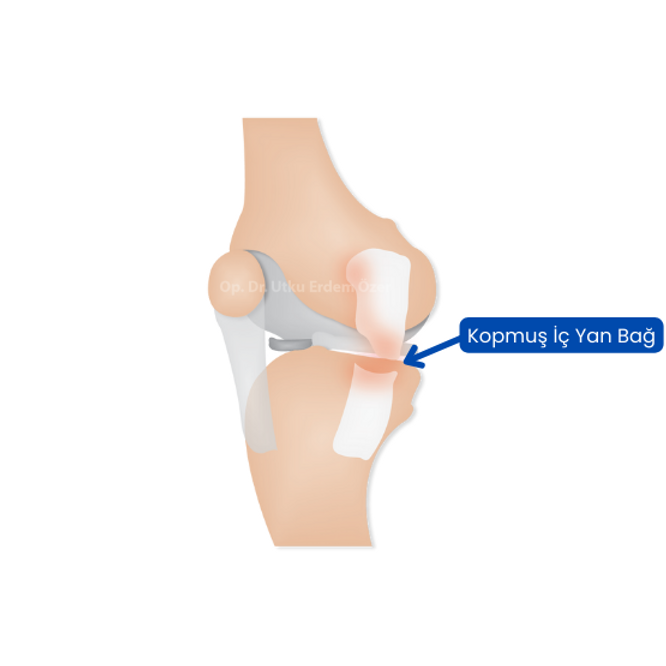
The medial collateral ligament (MCL) is one of the four major ligaments of the knee. It is a strong and flexible band of tissue that runs along the inner part of the knee joint, connecting the femur (thigh bone) to the tibia (shin bone). The MCL plays a crucial role in stabilizing the knee joint by preventing excessive inward movement of the knee. This ligament is particularly vulnerable to injuries, especially in athletes, due to sudden twists, collisions, or direct impacts to the knee.
The MCL is composed of three main structures:
– Superficial medial collateral ligament: The largest and strongest component.
– Deep medial collateral ligament
– Posterior oblique component
How Does an MCL Injury Occur?
Most MCL injuries are caused by sports-related injuries. An MCL injury occurs when a force from the outer side of the knee stretches or tears the structures on the inner side. This can happen due to direct impact, such as in contact sports, or more commonly, through indirect trauma without contact.
Symptoms of MCL Injury
The symptoms of MCL injury vary depending on the severity of the injury. Common symptoms include:
1. Pain: A sharp pain is immediately felt on the inner side of the knee after the injury. The pain may increase when the knee is moved or pressure is applied.
2. Swelling: Swelling on the inner side of the knee typically develops shortly after the injury and may increase over a few hours.
3. Tenderness: The inner side of the knee becomes tender to touch, making daily activities difficult.
4. Bruising: Bruising may appear under the skin due to blood pooling. The extent of bruising depends on the severity of the injury.
5. Instability: MCL injuries can cause instability in the knee, leading to a sensation of the knee “giving way” when trying to bend it.
6. Limited Motion: The range of motion in the knee may be reduced, making it difficult to fully bend or straighten the knee.
7. Knee Locking: In more severe MCL injuries, there may be a sensation of the knee locking or catching, which occurs when the torn MCL gets caught in the joint.
How is MCL Injury Diagnosed?
After carefully listening to the patient’s account of the injury mechanism, a physical examination including the valgus stress test is conducted to suspect an MCL injury. If the test is positive, knee X-rays and MRI imaging are used to confirm the diagnosis.
Grading of MCL Injuries
1. Grade 1 Injury: The mildest form of injury, involving slight stretching or tearing of the ligament without compromising its overall stability. Symptoms include mild pain, minimal swelling, and slight tenderness.
2. Grade 2 Injury: A moderate injury involving partial tearing of the ligament, leading to decreased stability. Symptoms include moderate pain on the inner side of the knee, noticeable swelling, and marked tenderness, along with restricted motion and a sensation of the knee “giving way.”
3. Grade 3 Injury: A complete tear of the MCL, resulting in severe instability. Symptoms include severe pain (which may decrease over time), significant swelling, bruising, and a pronounced sensation of the knee “giving way” when moved.
Recovery Times for MCL Injuries
Grade 1 MCL Injury: 5-10 days
Grade 2 MCL Injury: 2-4 weeks
Grade 3 MCL Injury: 4-8 weeks
These times are approximate and can vary depending on the individual patient and the level of activity.
Treatment of MCL Injury
Generally, grade 1 and grade 2 MCL injuries heal without surgery with the help of a well-executed physical therapy program, ultrasound-guided PRP injections (often 2 doses), and the use of a knee brace. Grade 3 MCL injuries may not require surgery if no other injuries are present in the knee.
If the MCL injury is accompanied by an ACL tear, both injuries are treated surgically. It is well understood that any “laxity” in the MCL can lead to a failed ACL reconstruction. Therefore, in combined MCL and ACL injuries, both should be addressed surgically at the same time. In cases of multiple ligament injuries, especially when the posterior cruciate ligament is also involved, MCL repair during surgery is essential. Additionally, MCL tears that completely detach from the femur or tibia require surgical repair as they will not heal properly without it.
Non-Surgical Treatment of MCL Injury
Most MCL injuries, particularly isolated injuries without other ligament damage, heal without the need for surgery through non-surgical methods. These include:
1. Rest, Ice, and Compression: Initial steps involve reducing swelling and bleeding in the torn area, allowing for rehabilitation exercises to commence.
2. Physical Therapy and Exercises: Physical therapy is recommended to restore knee mobility and strength. The therapy program includes exercises aimed at improving knee flexibility and stability.
3. Ultrasound-Guided PRP Injections
4. Knee Brace Use:
Use of Knee Braces in MCL Injury
Applying ice and compression can help minimize swelling in MCL injuries. A hinged knee brace may be necessary to prevent lateral movement of the knee and avoid putting the MCL in a stretched position during healing.
In general, a knee brace is not required for grade 1 injuries. However, for grade 2 and non-surgically treated grade 3 injuries, the use of a knee brace is recommended.
Additionally, scientific studies have shown that using a stationary bike during rehabilitation can aid in the healing of collagen fibers in the MCL. A well-planned rehabilitation program is highly effective in MCL recovery.
When is Surgery Required for MCL Injury?

Surgery may be required in the following cases:
· Grade 3 MCL injuries in multiple ligament injuries of the knee.
· Grade 3 MCL injuries completely detached from the femur or tibia.
· Cases where the MCL tear is obstructed from healing properly, such as Stener-type injuries.
Other MCL tear types generally heal, but a small number of MCL injuries may not recover with non-surgical methods. Therefore, patients with non-operated grade 3 MCL injuries should be closely monitored. Surgery is recommended for those who continue to show instability signs despite adequate time and appropriate treatment.
Thank you for reading our article. If you’d like, you can take a general look at our homepage through the utkuerdemozer.com link.