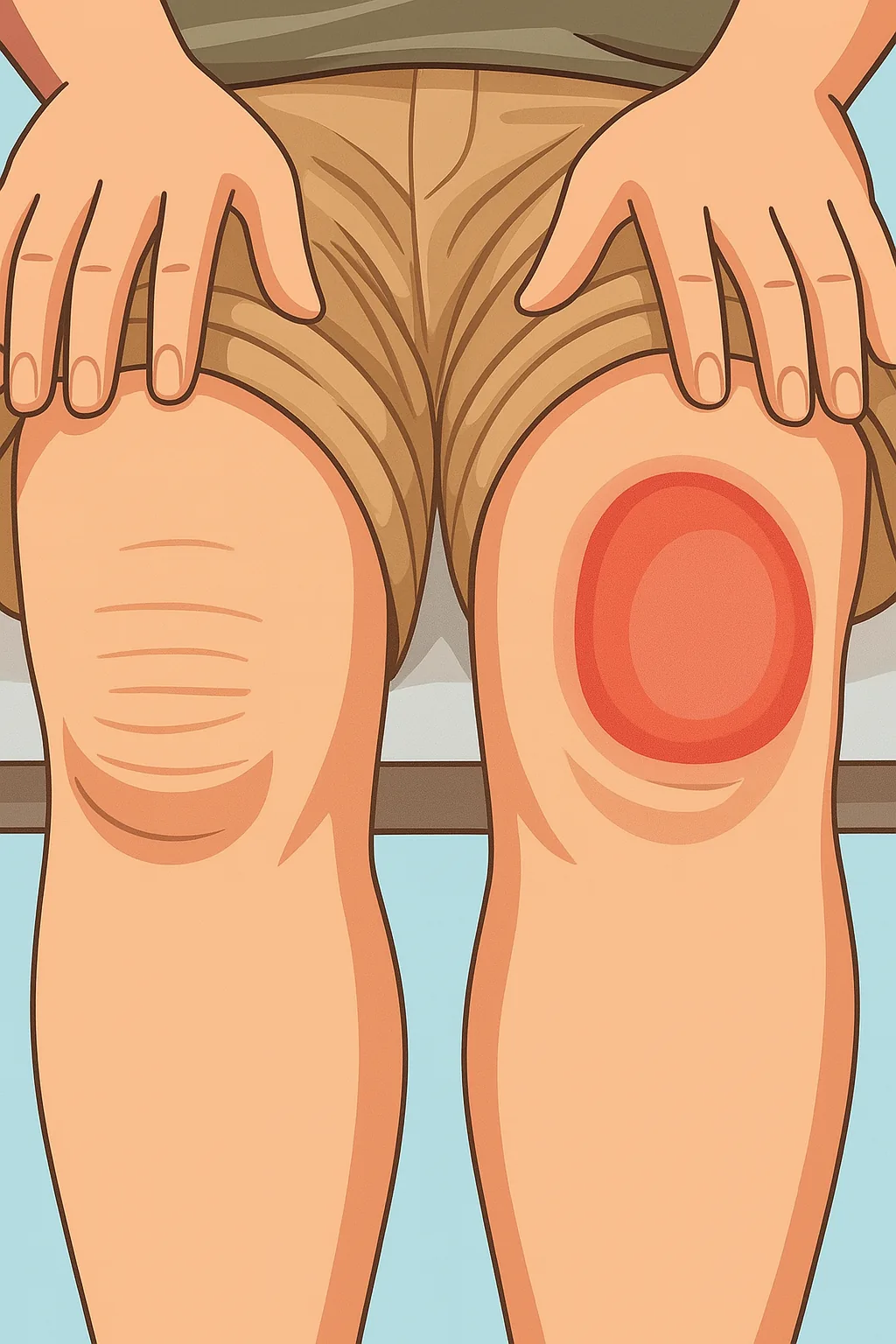
Knee bursitis is a condition that occurs when small, fluid-filled sacs around the knee joint, called bursae, become inflamed. Bursa tissues reduce friction between tendons and bone surfaces during joint movement, allowing smooth and pain-free motion. There are several bursae in the knee; among them, the prepatellar bursa—located just above the kneecap—is the most prone to inflammation caused by prolonged kneeling.
Add us as a preferred source on GoogleSee our new articles higher in your searchesAddThis condition is common in individuals who work on their knees for long periods, such as plumbers, cleaning staff, and gardeners. In addition, direct impact to the knee during contact sports such as football, basketball, or wrestling can also lead to prepatellar bursitis. People with rheumatoid arthritis, gout, or an increased risk of bacterial infection are also at higher risk of developing knee bursitis.
Diagnosis of knee bursitis is usually made through clinical examination. Ultrasound imaging is used to confirm the diagnosis and determine the degree of inflammation. In treatment, ultrasound-guided aspiration of the inflamed fluid inside the bursa, followed by a corticosteroid injection, can provide quick and effective results. Early diagnosis and appropriate treatment shorten recovery time and significantly reduce pain.
What Is Knee Bursitis?

Knee bursitis is the inflammation of one or more bursae located around the knee joint. These small sacs prevent friction between joints and tendons over bone surfaces, ensuring smooth and pain-free joint movement. When any of the bursae become inflamed, pain, swelling, and limited movement can occur.
What Causes Knee Bursitis?
The most common causes of knee bursitis include:
- Prolonged pressure on the knee: Especially in jobs requiring prolonged kneeling (plumbing, cleaning, gardening, etc.).
- Repetitive knee movements: Frequent activities such as running, squatting, or jumping.
- Trauma: Direct blows, falls, or collisions involving the knee.
- Infection: Bacterial infections can cause inflammation in the bursa.
- Rheumatic diseases: Conditions such as rheumatoid arthritis or gout, which predispose to joint inflammation.
What Are the Symptoms of Knee Bursitis?
Knee bursitis develops when inflammation occurs in the bursae around the joint. Symptoms often progress gradually, but they may also begin suddenly after trauma. The most common symptoms include:
- Swelling in the knee: Usually noticeable over the kneecap or on the inner side of the knee.
- Pain: Mild at rest, increasing with movement or pressure.
- Redness and warmth: The skin over the inflamed area becomes warm and red.
- Tenderness: Noticeable discomfort when touching the knee.
- Limited movement: Difficulty fully bending or straightening the knee due to swelling and pain.
- Difficulty in daily activities: Worsening symptoms when climbing stairs, squatting, or kneeling.
How Is Knee Bursitis Diagnosed?
Diagnosis is usually made through a clinical examination by a doctor. During the examination, swelling, tenderness, redness, and warmth in the knee are evaluated.
If necessary, ultrasound imaging is performed to confirm the diagnosis or to assess the extent of inflammation. Ultrasound clearly shows the amount of fluid in the bursa and the degree of inflammation.
Magnetic Resonance Imaging (MRI) is used mainly for differential diagnosis. MRI helps exclude other conditions that may cause similar symptoms, such as meniscus tears, ligament injuries, or intra-articular pathologies.
If infection is suspected, fluid from the bursa is aspirated with a fine needle and sent to a laboratory. Culture and antibiotic sensitivity tests are performed to identify the bacteria and determine the most effective antibiotic.
How Is Knee Bursitis Treated?
When the bursa is inflamed but not infected, knee bursitis is usually treated with non-surgical methods. Early and appropriate management speeds up recovery and reduces the risk of recurrence.
The first step in treatment is activity modification. Contact between the knee and hard surfaces can irritate the bursa and prolong swelling. Activities that put pressure on the knee should be avoided. If kneeling is unavoidable due to work, placing a soft cushion or knee pad between the knee and the ground is recommended.
In sports with high contact, such as volleyball, protective knee pads that fully cover the kneecap and have thick padding in the front can reduce the risk of prepatellar bursitis. These pads can also be used by non-athletes who place repeated pressure on the same area.
Treatment methods include:
- Rest and activity modification
- Cold application (especially in the first 48 hours, several times a day for 15–20 minutes)
- Pain relievers and anti-inflammatory medications
- Ultrasound-guided injection therapies (such as corticosteroids or PRP)
- Antibiotic therapy in case of infection
- Surgical treatment: Rarely, in recurrent or treatment-resistant cases, the bursa may be surgically removed.
With proper diagnosis and appropriate treatment, knee bursitis generally heals in a short time, and patients can return to their normal activities.
Treatment of Infectious Knee Bursitis
Infectious knee bursitis is inflammation of the bursa tissue caused by bacteria, and treatment priority is controlling the infection.
The first step is aspirating the fluid inside the bursa with a fine needle. The aspirated fluid is sent to a laboratory for culture and antibiotic sensitivity testing. This process identifies the microorganism causing the infection and determines the most effective antibiotic.
Based on the test results, targeted antibiotic therapy is initiated. The treatment duration depends on the severity of the infection and the patient’s overall condition.
If the infection spreads, does not improve despite treatment, or recurs, surgical removal of the bursa tissue may be necessary.
Early diagnosis and appropriate treatment prevent permanent damage to the structures around the joint and shorten the recovery period.
How to Prevent Knee Bursitis
Taking certain measures in daily life and during sports can help reduce the risk of knee bursitis:
- Avoid excessive pressure on the knee: Prolonged kneeling on hard surfaces irritates the bursa tissue.
- Use knee pads for work requiring kneeling: Make it a habit, especially in professions such as repair, cleaning, or gardening.
- Warm up and stretch before exercise: Flexible muscles and joints reduce the load on the bursa tissue.
- Avoid repetitive movements or take breaks: Prolonged repetition of the same movement increases the risk of bursa inflammation. Take regular breaks.
These simple precautions can significantly reduce the risk of knee bursitis, especially in high-risk occupational groups and athletes.
Frequently Asked Questions (FAQ) About Knee Bursitis
Is knee bursitis contagious?
No, knee bursitis is usually not contagious. However, in cases of infectious bursitis, the bacteria causing the inflammation can be transmitted through contact.
How long does it take for knee bursitis to heal?
With early diagnosis and proper treatment, knee bursitis usually heals within 2–4 weeks. In chronic or recurrent cases, recovery may take longer.
Can knee bursitis come back?
Yes, especially if continuous pressure, impact, or repetitive movements on the knee persist, bursitis may recur.
Is knee bursitis dangerous?
It is usually not a serious condition. However, if it becomes infected, the inflammation can spread to the joint and surrounding tissues, requiring urgent treatment.
Should heat or cold be applied for knee bursitis?
Cold application should be used during the first 48 hours. This helps reduce swelling and pain.
Is it safe to exercise with knee bursitis?
High-impact sports and activities that put pressure on the knee should be avoided during the recovery process.
Which doctor should be consulted for knee bursitis?
An orthopedic and traumatology specialist should be consulted.
Can knee bursitis turn into cancer?
No, knee bursitis does not turn into cancer.
When is surgery necessary for knee bursitis?
Surgery may be required in cases where the infection is recurrent or chronic.
Can knee bursitis heal on its own?
Mild cases may resolve with rest, ice application, and activity modification. However, due to the risk of recurrence or chronicity, medical evaluation is important.
Conclusion
Knee bursitis is a condition that can often be successfully managed with non-surgical treatments. Early diagnosis and proper management shorten recovery time and reduce the risk of recurrence. People who frequently place load on their knees for occupational reasons, athletes, and those with knee trauma are in the risk group.
For long-term recovery, it is essential to avoid activities that place direct pressure on the knee, use knee pads when necessary, and perform warm-up and stretching exercises before sports. Controlling rheumatic diseases and preventing trauma are also important.
In cases of infectious knee bursitis, treatment must be carried out under the supervision of a specialist physician, and appropriate antibiotics should be selected based on fluid samples taken from the bursa. If not treated in time, such bursitis can cause the infection to spread and may require surgical intervention.
If pain, swelling, redness, increased warmth, or restricted movement is noticed in the knee, consulting an orthopedic specialist without delay is crucial for protecting joint health. Early intervention helps maintain quality of daily life and ensures the joint continues to function healthily in the long term.