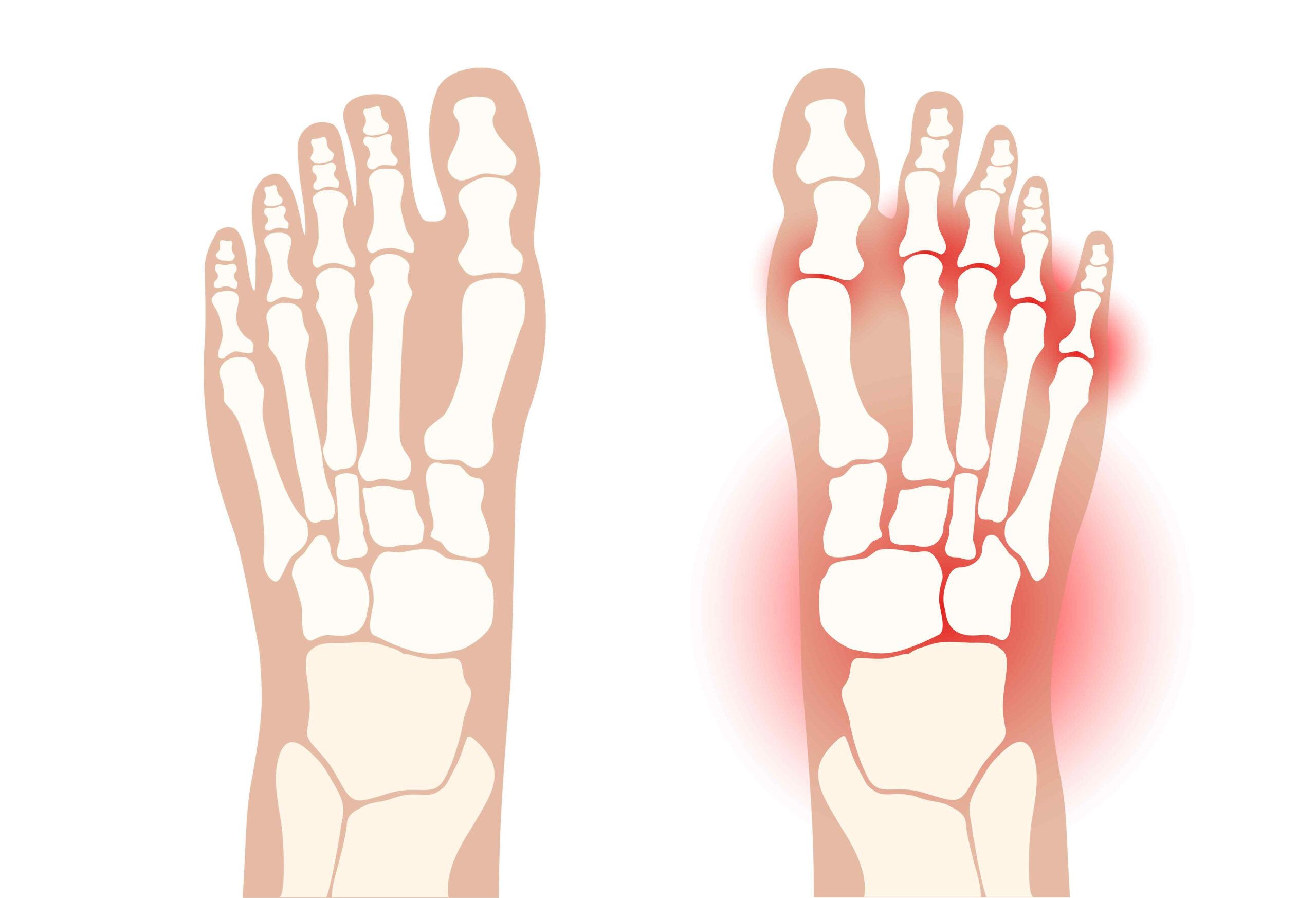
Morton’s neuroma (interdigital neuroma) develops when the common digital nerve in the forefoot, especially between the 3rd and 4th toes (less commonly between the 2nd and 3rd toes), is repeatedly compressed under the transverse intermetatarsal ligament. This continuous pressure leads to nerve thickening over time. Typical symptoms include burning, stabbing pain, numbness, and the sensation of “walking on a pebble” in the ball of the foot and toes. Walking, prolonged standing, and wearing narrow or high-heeled shoes usually make the symptoms worse. Diagnosis is most often made with a careful physical examination.
Add us as a preferred source on GoogleSee our new articles higher in your searchesAddMorton’s neuroma is seen nine times more frequently in women than in men. A typical scenario is a woman forced to take off her shoes in the middle of the street due to sudden pain — often caused by Morton’s neuroma.
In the early stages, wide toe-box shoes, metatarsal pads, and ultrasound-guided corticosteroid injections are preferred as non-surgical treatment options. However, in patients who do not respond to these conservative methods, surgical treatment may be required.
What Is Morton’s Neuroma?
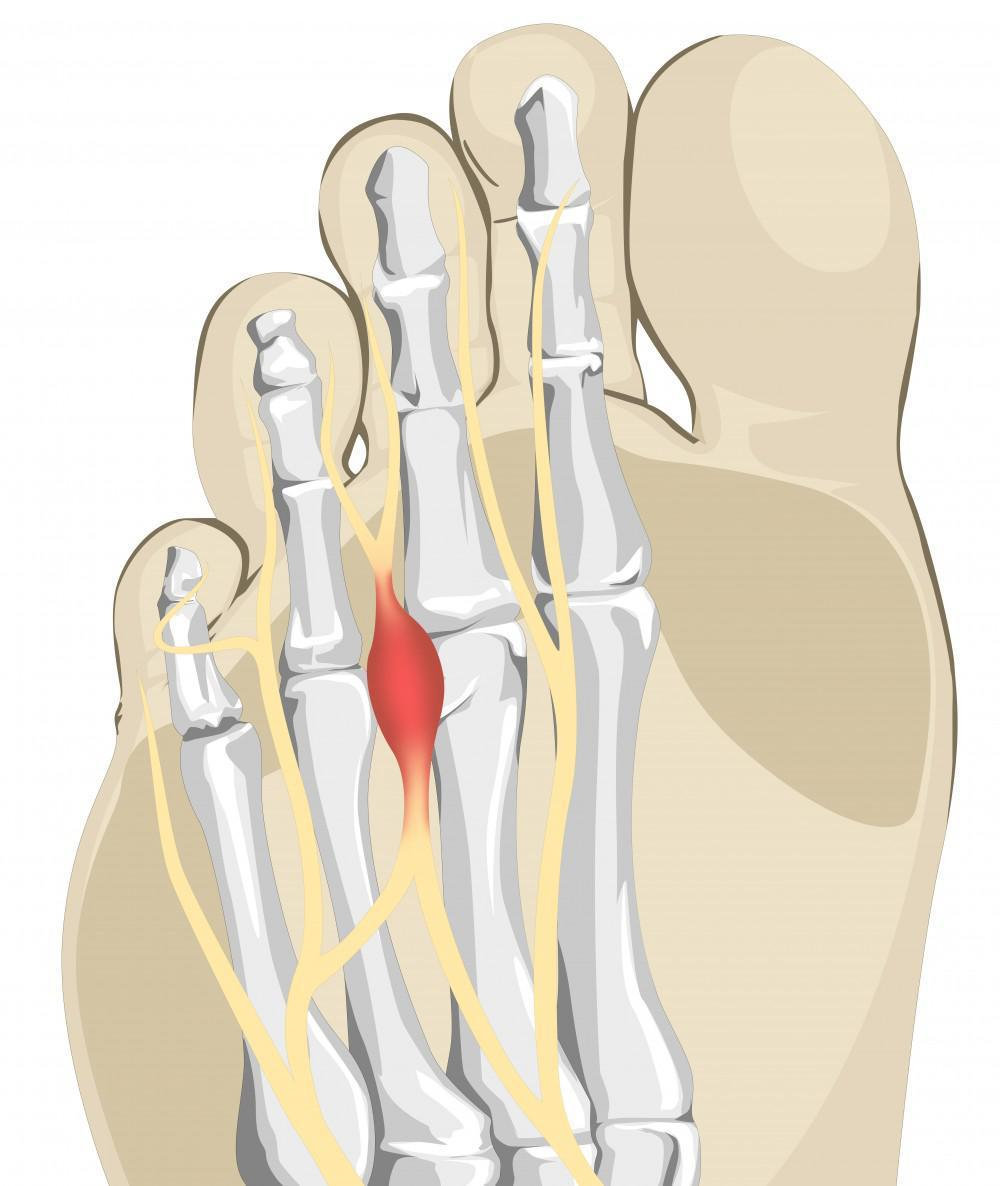
Morton’s neuroma is a nerve entrapment syndrome (neuropathy) caused by repeated compression of the common digital nerve at the level of the metatarsal heads, beneath the transverse intermetatarsal ligament. Although it is most commonly seen between the 3rd and 4th toes, Morton’s neuroma can occur in any intermetatarsal space.
Patients usually describe burning, tingling, or sharp pain in the forefoot and affected toes while walking or standing for long periods. Narrow or high-heeled shoes worsen the symptoms, while foot deformities such as flatfoot (pes planus) or high arch (pes cavus) increase the risk.
What Are the Symptoms of Morton’s Neuroma?
Morton’s neuroma symptoms vary from person to person but typically include:
1. Pain
- Burning or stabbing pain at the level of the metatarsal heads.
- Pain often radiates into the toes. Patients frequently describe it as “walking barefoot on a stone.”
- Pain decreases with rest and worsens with activity. It becomes more pronounced after wearing narrow or high-heeled shoes, long walks, or running.
- Patients often feel relief after removing their shoes.
- Night pain is uncommon.
2. Numbness and Tingling
- Numbness, tingling, or an electric shock-like sensation may occur in the affected toes.
- Some patients cannot clearly describe it as numbness but rather as a disturbing or abnormal sensation in the forefoot and toes.
Who Is Most at Risk for Morton’s Neuroma?
Morton’s neuroma is more common in individuals with certain risk factors:
1. Female Gender
- About 90% of cases are women (female-to-male ratio 9:1).
- The main reason is the use of high-heeled and narrow toe-box shoes, which concentrate body weight on the forefoot and compress the nerve.
2. Flatfoot (Pes Planus)
- Loss of the natural foot arch alters weight distribution.
- This increases pressure on the intermetatarsal space and predisposes to neuroma formation.
3. Hallux Valgus (Bunion)
- Deviation of the big toe toward the smaller toes narrows the intermetatarsal space.
- This mechanical effect increases the likelihood of developing Morton’s neuroma.
How Is Morton’s Neuroma Diagnosed?
Diagnosis is usually made through a detailed history and physical examination.
- Physical Examination: When the intermetatarsal space is squeezed, the thickened nerve may feel like a palpable mass. This compression reproduces the burning and stabbing pain radiating into the toes. This finding is known as Mulder’s sign.
- Imaging:
- Magnetic Resonance Imaging (MRI): Can visualize nerve thickening and neuroma.
- Ultrasound (USG): Useful for detecting neuroma location during dynamic assessment and for guiding injections.
- Some patients may present with multiple neuromas in the same foot.
How Is Morton’s Neuroma Treated?
Non-Surgical Treatment
1. Shoe Modification
Narrow, high-heeled, and stiff-soled shoes aggravate Morton’s neuroma. The first step in treatment is switching to wide toe-box, cushioned shoes. If the condition is diagnosed early and the patient adapts quickly, reducing nerve compression may reverse the damage and prevent recurrence.
2. Orthotics
Custom-made metatarsal pads or insoles are designed to reduce pressure on the compressed nerve. However, they are not always easy to use; some patients may need to switch to larger shoes for comfort.
3. Ultrasound-Guided Corticosteroid Injection
Corticosteroid injections performed under ultrasound guidance reduce inflammation around the compressed nerve, relieving pain and numbness.
- Most patients experience significant improvement after a single injection.
- Some may require a second injection.
- If two injections fail to provide relief, repeated injections are not recommended.
Surgical Treatment
In patients whose symptoms persist despite non-surgical management, surgery for Morton’s neuroma is considered. During surgery, the thickened nerve tissue is excised. The success rate is high, but not every patient requires surgical intervention.
What Happens If Morton’s Neuroma Is Not Treated?
If left untreated, Morton’s neuroma progresses and symptoms gradually worsen. Pain and discomfort increase, making daily activities difficult. Long-standing untreated cases may lead to difficulty walking and permanent nerve damage, resulting in continuous numbness, burning, and pain in the toes.
Early diagnosis and treatment are crucial to prevent long-term complications.
| Condition | Outcome |
|---|---|
| Chronic pain | Makes daily activities difficult |
| Restricted mobility | Negatively affects work and social life |
| Need for surgery | Becomes inevitable in advanced stages |
Early diagnosis and proper management are the most effective ways to prevent long-term complications.
Which Patients Should Have Surgery for Morton’s Neuroma?
Surgery is recommended only when non-surgical methods fail to provide significant relief. Patients who continue to have symptoms despite wearing wide toe-box shoes, using metatarsal pads, and undergoing ultrasound-guided corticosteroid injections may require surgery.
Clinical studies show that approximately 80% of Morton’s neuroma patients improve with non-surgical treatment, while only 20% require surgical intervention. Postoperative patient satisfaction is high, with success rates exceeding 85%.
How Is Morton’s Neuroma Surgery Performed?
The goal of surgical treatment is to relieve pressure on the entrapped nerve.
- The transverse intermetatarsal ligament is released to decompress the nerve.
- If the nerve tissue shows significant thickening or mass formation, this segment is also excised.
- The procedure is usually performed through a small 2–3 cm incision on the top of the foot.
Following surgery, most patients experience significant relief of pain and numbness. Patient satisfaction is high and long-term results are favorable. In cases where conservative methods fail, surgery should not be delayed.
Recovery After Morton’s Neuroma Surgery
- First 10–14 days: The incision heals. Showering is possible with waterproof dressings.
- First week: Patients are advised to avoid full weight-bearing; most weight should be placed on the heel while walking.
- Weeks 2–3: Light exercises can be initiated. Athletes may return to low-intensity training.
- Week 6: Full return to sports is usually possible.
Morton’s Neuroma Exercises
Specific exercises can help reduce pressure on the forefoot, strengthen foot muscles, and relieve stress on the nerve. These exercises do not replace treatment but can be used as supportive measures alongside non-surgical therapies.
1. Toe Stretching Exercises
- Pressing toes together: Push the toes toward each other and hold for 10 seconds. Repeat several times throughout the day.
- Toe spreading: Spread the toes as wide as possible and hold for 10 seconds. Repeat regularly to improve flexibility.
2. Foot Strengthening Exercises
- Heel raises: Stand and slowly lift the heels off the ground, balancing on the toes for 5 seconds, then lower slowly. Perform 10–15 repetitions daily.
- Towel scrunches: Place a towel on the floor and use the toes to grip and pull it toward you. Repeat 5–10 times for each foot.
3. Ankle Stretching Exercises
- Circular movements: While seated, lift the foot off the ground and rotate the ankle in circular motions. Perform 10 repetitions in each direction.
- Dorsiflexion and plantar flexion: Move the ankle upward (dorsiflexion) and downward (plantar flexion). Perform 10 repetitions for each movement.
Why Do Toes Go Numb? – The Link with Morton’s Neuroma
Numbness in the toes is usually a nerve-related problem. One of the most common causes is Morton’s neuroma, a condition caused by nerve compression.
Morton’s neuroma develops when the common digital nerve between the 3rd and 4th toes becomes compressed between the metatarsal bones under the transverse intermetatarsal ligament. This compression causes thickening of the nerve and leads to symptoms such as numbness, tingling, burning, and electric shock-like sensations.
Symptoms of Numbness Due to Morton’s Neuroma
- Numbness between the 3rd and 4th toes while walking or standing for long periods
- Sensation of a folded sock or shoe under the ball of the foot
- Tingling or electric shock radiating into the toes
- Symptoms worsening with tight or high-heeled shoes
- Temporary relief after removing shoes
Frequently Asked Questions About Morton’s Neuroma
What is Morton’s neuroma?
Morton’s neuroma is a nerve entrapment that develops when the nerve between the toes becomes compressed, causing pain and numbness.
Between which toes is Morton’s neuroma most common?
It is most frequently seen between the 3rd and 4th toes. Less commonly, it may also occur between the 2nd and 3rd toes.
What causes Morton’s neuroma?
Tight or high-heeled shoes, structural foot deformities (such as flatfoot or hallux valgus), prolonged standing, and repetitive forefoot pressure are common causes.
Who is more likely to get Morton’s neuroma?
Women are about nine times more likely to develop the condition compared to men. The main reason is the use of high-heeled and narrow toe-box shoes.
What are the symptoms of Morton’s neuroma?
Typical symptoms include burning pain in the ball of the foot, numbness, tingling, electric shock sensations in the toes, and the feeling of walking on a pebble.
Does Morton’s neuroma go away on its own?
No. It usually does not resolve spontaneously. Symptoms may improve with proper footwear and conservative treatment methods.
How is Morton’s neuroma diagnosed?
Diagnosis is based on medical history and physical examination. MRI and ultrasound imaging can confirm the diagnosis.
Can Morton’s neuroma be seen on MRI?
Yes. MRI can clearly show thickening of the nerve and changes in the surrounding tissues.
Can Morton’s neuroma be seen on ultrasound?
Yes. Ultrasound can reveal nerve thickening and compression, and it is also used to guide injections.
Which doctor treats Morton’s neuroma?
Morton’s neuroma is diagnosed and treated by orthopedic surgeons. Physical medicine specialists may also assist in rehabilitation.
How is Morton’s neuroma treated?
First-line treatment includes wide toe-box shoes, metatarsal pads, orthotics, and ultrasound-guided corticosteroid injections. Surgery is considered in advanced cases.
What happens if Morton’s neuroma is not treated?
If untreated, pain and numbness can become permanent, and chronic nerve damage may significantly restrict daily life.
What exercises help Morton’s neuroma?
Toe stretches, towel scrunches, heel raises, and ankle mobility exercises may reduce pressure on the nerve.
Can Morton’s neuroma heal completely?
Yes. With early diagnosis and appropriate treatment, complete recovery is possible. In advanced cases, surgery has a success rate above 85%.
How is Morton’s neuroma surgery performed?
A small 2–3 cm incision is made on the top of the foot. The nerve is decompressed, and if necessary, the thickened nerve tissue is excised.
Is Morton’s neuroma surgery risky?
As with any surgical procedure, there are risks, but complication rates are low. Success rates are high and patient satisfaction is generally very good.
How long is recovery after Morton’s neuroma surgery?
Incision healing takes about 10–14 days. Return to daily activities is possible within weeks, and athletes usually resume sports after 6 weeks.
At what ages does Morton’s neuroma occur?
It is most common between the ages of 30 and 60, but it can develop at any age.
Which shoes make Morton’s neuroma worse?
Narrow, high-heeled, and thin-soled shoes worsen symptoms. Wide toe-box and cushioned shoes are recommended.
Can Morton’s neuroma be treated with herbal remedies?
No. There is no scientifically proven herbal cure. Effective treatment includes non-surgical methods (orthotics, injections, footwear changes) and surgery if necessary.
Does hallux valgus increase the risk of Morton’s neuroma?
Yes. Hallux valgus causes the big toe to deviate outward, narrowing the intermetatarsal space and increasing nerve compression risk.
Can Morton’s neuroma and hallux valgus occur together?
Yes. Especially in women, both conditions often coexist. The bunion deformity causes imbalanced pressure in the forefoot, triggering neuroma symptoms in the same region.
How can Morton’s neuroma be distinguished from hallux valgus?
Hallux valgus presents with a bony bump, redness, and shoe irritation at the big toe joint. Morton’s neuroma typically causes burning pain, numbness, and tingling between the 3rd and 4th toes. Both conditions can occur together.
Can Morton’s neuroma and hallux valgus be treated at the same time?
Yes. If both conditions are present, the treatment plan is combined. Conservative measures are tried first; if surgery is needed, both deformities can be corrected in the same operation.
Can hallux valgus surgery also improve Morton’s neuroma?
In some cases, bunion surgery reduces forefoot pressure and improves neuroma symptoms. However, if the neuroma is advanced, a separate procedure may be required.
Conclusion
Morton’s neuroma is a painful nerve entrapment in the forefoot that causes burning, numbness, and tingling in the toes. Diagnosis is usually made with a careful physical examination.
First-line treatments include wide toe-box shoes, orthotics, and ultrasound-guided corticosteroid injections. For patients who do not respond to conservative care, surgery provides a permanent and effective solution.
With early diagnosis and proper treatment, most patients with Morton’s neuroma experience significant improvement in quality of life within a short period of time.