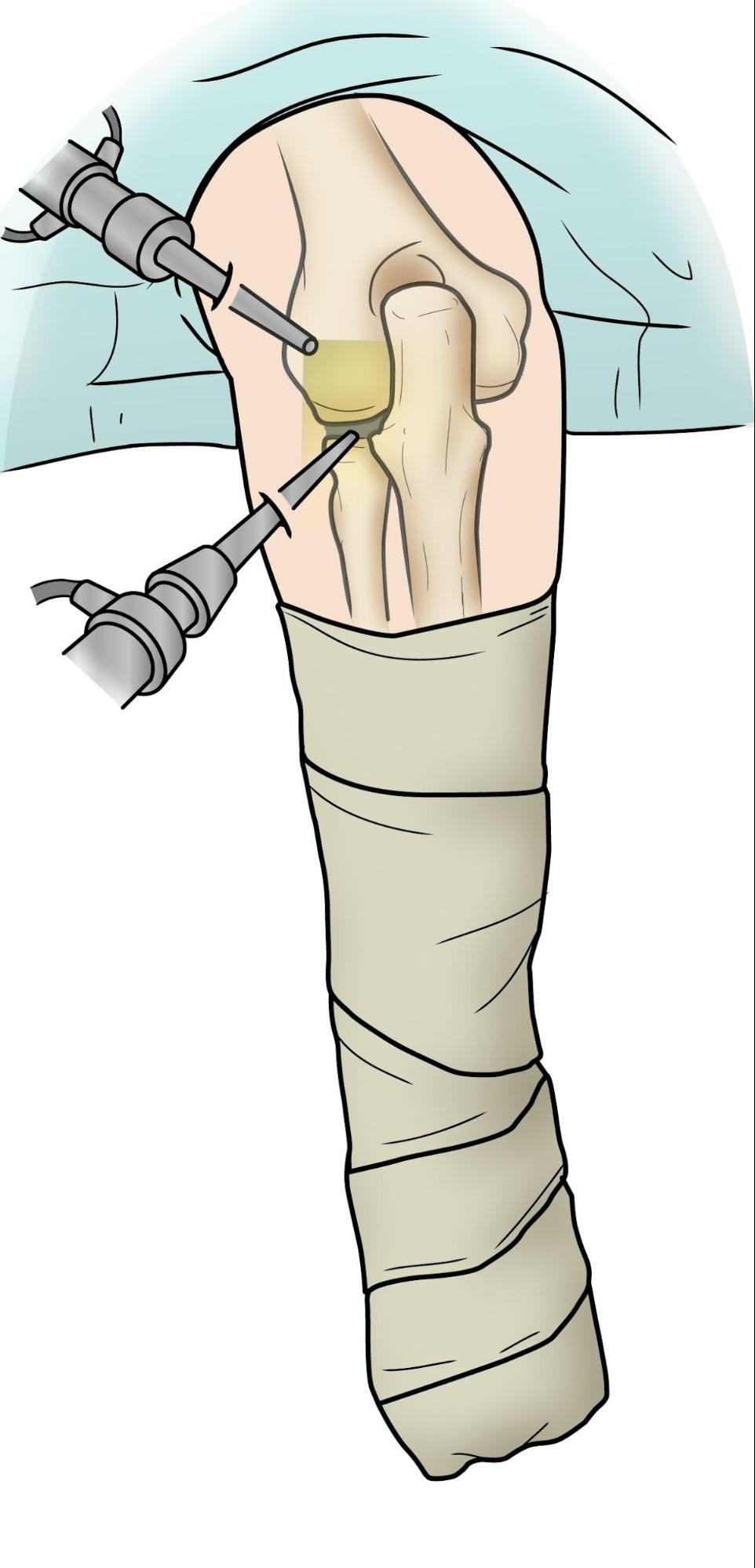
During the procedure, a camera and specialized surgical instruments are used to directly visualize the inside of the joint and perform the necessary interventions. Elbow arthroscopy is commonly used to treat cartilage lesions, loose bodies within the joint, elbow stiffness (arthrofibrosis), osteophyte formation, osteochondritis dissecans, and tennis elbow (lateral epicondylitis). Compared to traditional open surgery, it offers the advantages of less tissue damage, faster recovery, and a lower risk of complications.
Add us as a preferred source on GoogleSee our new articles higher in your searchesAddIf you are experiencing pain, limited range of motion, or swelling in your elbow joint, you may benefit from elbow arthroscopy. Op. Dr. Utku Erdem Özer is here to offer you the most accurate treatment options with his expertise and experience. For more information, to schedule an appointment, or to ask any questions, please feel free to contact us.
Who Is a Good Candidate for Elbow Arthroscopy?
Elbow arthroscopy is an effective treatment option for a wide range of conditions that cause pain, limited movement, or mechanical symptoms in the elbow joint. It is typically recommended for the following situations:
-
Post-Traumatic Loose Bodies: Elbow arthroscopy is used to remove cartilage or bone fragments that move freely within the joint, causing pain and a catching sensation.
-
Elbow Stiffness (Arthrofibrosis): In cases where the elbow joint capsule thickens due to trauma or prior surgeries, limiting mobility, arthroscopy can be used to restore motion.
-
Osteophyte Formation: Bone spurs caused by trauma or rheumatic diseases can restrict joint motion and cause pain. These can be removed arthroscopically.
-
Osteochondritis Dissecans: Arthroscopic techniques can be effective in treating this condition, which involves the separation of bone beneath the elbow cartilage.
-
Tennis Elbow (Lateral Epicondylitis): In chronic cases that do not respond to conservative treatment, arthroscopy can be used to remove the damaged tissue and reduce pain.
-
Elbow Cartilage Lesions: Arthroscopy allows for cartilage repair in patients experiencing pain and limited mobility due to cartilage damage.
Minimally invasive elbow surgery provides an effective surgical solution for these types of problems and helps patients return to their daily activities more quickly.
How Is Elbow Arthroscopy Performed?
Elbow arthroscopy is a minimally invasive surgical technique usually performed under general anesthesia. During the procedure, the patient is positioned appropriately, and preparations are made to ensure clear visualization of the elbow joint. The procedure is carried out in the following steps:
-
Skin Incisions: One or two small incisions, about 1.5 cm in size, are made around the elbow. These serve as entry points for the camera and surgical instruments.
-
Insertion of the Camera: A thin, pencil-sized camera with a light source at its tip (arthroscope) is inserted through one of the incisions. This camera transmits real-time images to a monitor, allowing the surgeon to view the joint in detail.
-
Identification of the Problem: Using the live images, the surgeon assesses the joint for damage, loose bodies, cartilage lesions, or other abnormalities.
-
Surgical Intervention: Specialized instruments are inserted through the other incision. Depending on the diagnosis, the following treatments may be performed:
-
Removal of loose bone or cartilage fragments
-
Cleaning of osteophytes (bone spurs)
-
Repair of damaged tissues
-
Capsular release procedures
-
-
Joint Irrigation: During the surgery, the joint is flushed with sterile fluids to remove debris and maintain a clear view.
-
Closure of Incisions: Once the procedure is completed, the small incisions are closed with sutures and covered with sterile dressings.
What Are the Advantages of Elbow Arthroscopy?
Compared to traditional open surgery, elbow arthroscopy offers several benefits. It provides a safer and more comfortable treatment experience for both surgeons and patients. Key advantages include:
-
Minimally Invasive Approach: Small incisions minimize damage to surrounding tissues.
-
Smaller Scars: The small size of the incisions results in better cosmetic outcomes and faster healing.
-
Less Postoperative Pain: Less soft tissue disruption leads to reduced pain after surgery.
-
Faster Recovery Time: Tissues heal more quickly, enabling patients to return to daily activities sooner.
-
Lower Risk of Infection: Minimal incisions and less tissue trauma significantly reduce the risk of infection.
-
Shorter Hospital Stay: Most patients are discharged on the same day as the surgery.
-
Clear and Detailed Visualization: The arthroscopic camera offers high-resolution, real-time imaging of joint structures.
-
Functional Outcomes: Postoperative joint motion and function are better preserved and restored.
Risks of Elbow Arthroscopy
As with any surgical procedure, elbow arthroscopy has certain risks and limitations:
-
Although rare, infection or bleeding may occur.
-
There is a slight risk of injury to nearby nerves or blood vessels, though this is minimized in the hands of an experienced surgeon.
-
Some patients may experience postoperative joint stiffness.
However, these risks can be largely avoided with proper surgical techniques and appropriate patient selection.
Recovery After Elbow Arthroscopy Surgery
The recovery process after elbow arthroscopy may vary depending on the type of procedure and the extent of intervention performed. However, in general, most patients follow a structured recovery timeline as outlined below:
1. First Few Days After Surgery
-
Most patients are discharged on the same day as the procedure.
-
The elbow is usually supported with a sling to limit movement.
-
Mild pain and swelling are common and can be managed with pain medications and cold therapy.
-
It is important to keep the surgical area clean and dry.
2. Early Rehabilitation Phase (First 2–3 Weeks)
-
Guided by your physician, gentle range-of-motion exercises are initiated to restore elbow mobility.
-
Physical therapy plays a key role in maintaining joint motion and regaining muscle strength.
-
Lifting heavy objects and strenuous elbow movements should be avoided.
3. Mid-Term Rehabilitation (Weeks 4–8)
-
Mobility exercises become more active and targeted.
-
Light strengthening exercises are introduced.
-
Daily activities and light tasks can usually be resumed, but heavy lifting or intense physical activity should still be avoided.
4. Late Phase and Full Recovery (After 8 Weeks)
-
Elbow range of motion and muscle strength typically return to near-normal levels.
-
Patients may gradually resume sports or physically demanding work.
-
Full recovery usually takes between 3 to 6 months.
Important Tips During Recovery:
-
Follow all recommendations from your doctor and physiotherapist.
-
Do not skip physical therapy sessions.
-
If swelling or pain persists, consult your physician.
-
Avoid overloading the elbow.
-
Compared to open surgery, elbow arthroscopy offers smaller incisions, less tissue damage, and faster recovery.
Successful healing after minimally invasive elbow surgery depends not only on the quality of the surgical intervention but also on the patient’s commitment to the rehabilitation program.
Post-Op Elbow Physical Therapy Exercises
1. Hand Squeezing and Finger ExercisesPurpose: Improve finger mobility and promote circulation. How to Do:
-
Make a fist, hold for a few seconds, then release.
-
Fully spread your fingers and then close them again.
-
Repeat 10–15 times daily.
2. Passive Elbow Flexion and ExtensionPurpose: Regain elbow joint range of motion. How to Do:
-
Use your healthy arm to gently bend and straighten the operated elbow.
-
Avoid pushing through pain.
-
10–12 repetitions per day are sufficient.
3. Pronation and Supination Exercises (Forearm Rotations)Purpose: Restore wrist and forearm mobility. How to Do:
-
Keep your arm straight and turn your hand palm up.
-
Then rotate it until the palm faces down.
-
Repeat 10 times in each direction.
Patient Testimonials: Elbow Arthroscopy Experiences
-
1. Sümeyye T.“I visited Dr. Utku for chronic elbow pain I had suffered for years. He thoroughly explained the procedure beforehand and helped calm my fears. The first week after surgery was a bit tough, but I recovered quickly with physical therapy. Now I can do all my daily activities again. I’m so grateful.”
-
2. Mehmet A.“I had a serious elbow fracture from a football injury. Dr. Utku Erdem Özer performed the surgery. His professionalism and kind approach made the process easy. I’m now fully recovered and back to sports. I’m glad I trusted him.”
-
3. Leyla D.“I was hesitant about elbow replacement surgery, but Dr. Utku answered all my questions patiently. He supported me throughout the postoperative phase. I have no issues now. He is a truly excellent doctor.”
Frequently Asked Questions (FAQ) About Elbow Arthroscopy
1. How long does elbow arthroscopy take?The procedure typically lasts 1 to 2 hours, depending on the complexity of the condition and the type of intervention required.
2. How long will I stay in the hospital?Most patients are discharged the same day. However, in certain cases, an overnight stay may be recommended.
3. When can I return to work?Patients with desk jobs usually return within 1–2 weeks. Those with physically demanding jobs may require 6–8 weeks for full recovery.
4. When can I resume sports?Light sports activities can usually be resumed within 6–8 weeks. Full recovery for contact sports or high-intensity activities may take 3–6 months.
5. Is physical therapy necessary after surgery?Yes. Physical therapy is essential for a successful recovery and restoring full range of motion in the elbow.
6. Is elbow arthroscopy painful?Mild discomfort and pain are expected during the first few days after surgery, but they are usually manageable with painkillers and proper care.
7. Are there any risks associated with elbow arthroscopy?As with any surgery, there are some risks, including:
-
Infection
-
Nerve or blood vessel injury
-
Joint stiffness
-
Bleeding
These are rare when performed by an experienced surgeon.
8. What is the success rate of elbow arthroscopy?When performed with proper technique and patient selection, elbow arthroscopy has a high success rate. Most patients experience significant pain relief and return to normal function.
9. How long should I keep my arm in a sling after surgery?Usually, the arm is kept in a sling for the first few days, though the duration may vary depending on the procedure performed.
10. Will there be a visible scar after surgery?Since the incisions are very small, scarring is minimal and typically becomes barely noticeable over time.
Conclusion
If you’re experiencing pain, limited motion, or recurrent issues in your elbow joint, early diagnosis and appropriate treatment are essential. Elbow arthroscopy is an effective method for both diagnosing and treating such problems.
Op. Dr. Utku Erdem Özer, an orthopedic and sports surgeon based in Istanbul, has extensive experience in minimally invasive elbow surgery. He offers individualized treatment plans tailored to each patient’s needs, helping restore elbow joint health.
Timely and proper treatment is key to a healthy, pain-free life. Contact our clinic today for expert consultation regarding your elbow problems.