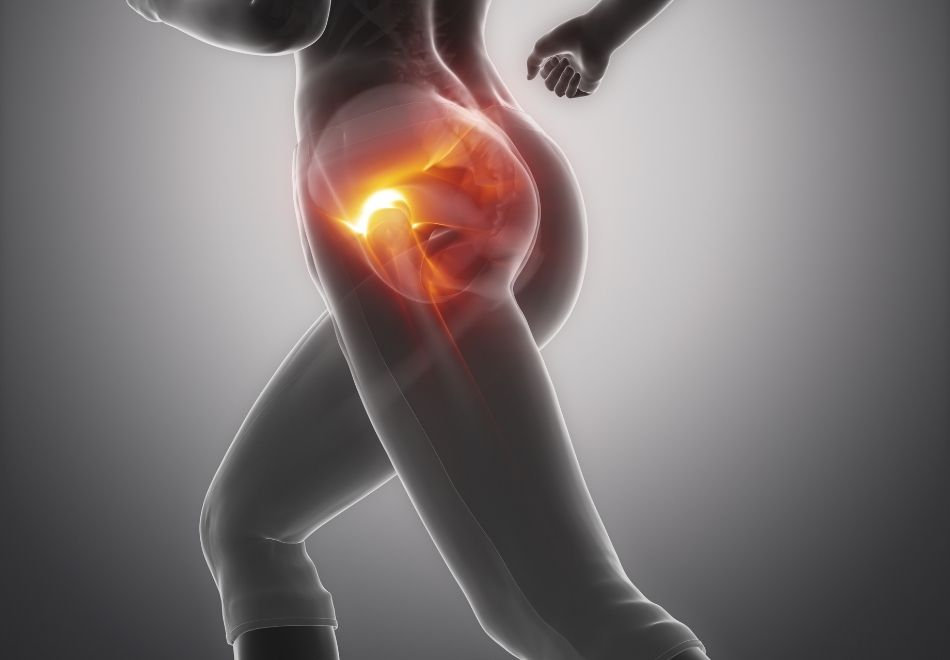
Hip pain can be felt in different areas of the body depending on its source, and this distribution provides an important clue for identifying the underlying cause. Pain originating from the hip joint is usually felt in the front of the hip, in the groin region. On the other hand, pain felt at the back of the hip, in the gluteal region, is often related to non-joint causes such as lumbar disc herniation, piriformis syndrome, lumbar facet syndrome, or cluneal nerve entrapment.
Add us as a preferred source on GoogleSee our new articles higher in your searchesAddThis distinction is critical for accurate diagnosis and effective treatment. To identify the cause of hip pain and choose the right management approach, the location, severity, and associated symptoms of the pain must be carefully evaluated.
If you are experiencing hip pain, it is important to consult an orthopedic specialist to determine the source of the pain and prevent further damage to the joint. Dr. Utku Erdem Özer, an orthopedic surgeon specialized in hip surgery based in Istanbul, has extensive experience in diagnosing and treating patients with hip pain.
What Is Hip Pain?
Hip pain originates from the bones, muscles, tendons, ligaments, or nerves surrounding the hip joint. As one of the largest weight-bearing joints in the body, the hip plays a vital role in supporting movement. For this reason, hip pain can limit mobility and interfere with daily activities.
The pain may become more noticeable while climbing stairs, walking long distances, or lifting heavy objects. It can range from a mild ache to severe, sharp pain. Sometimes it is localized only in the hip, while in other cases it may radiate to the groin, thigh, or lower back.
Common causes include arthritis, injuries, bursitis, nerve entrapments, and trauma. In some cases, the pain can be severe enough to wake a person from sleep, significantly affecting quality of life.
Why Does the Location of Hip Pain Matter?
Whether hip pain is felt in the groin (front) or the gluteal region (back) provides an essential clue to its origin.
Groin pain is usually associated with problems within the hip joint itself.
Buttock (gluteal) pain is more often related to spine problems, such as lumbar disc herniation, or extra-articular conditions such as piriformis syndrome, which originates from the piriformis muscle located behind the hip joint.
Causes of Hip Pain Felt in the Buttock
Hip pain located in the back of the hip (gluteal region) often arises from extra-articular causes rather than the hip joint itself. These pains may result from compression of nerves emerging from the lumbar spine, musculoskeletal disorders, or nerve entrapments. Key causes include:
- Lumbar disc herniation (slipped disc)
- Piriformis syndrome
- Lumbar facet joint syndrome
- Cluneal nerve entrapment
- Proximal hamstring tendinopathy
- Sacroiliac joint dysfunction
- Deep Gluteal Pain Syndrome (DGPS)
- Trochanteric Bursitis
Causes of Hip Pain in the Buttock (Gluteal Region)
1. Lumbar Disc Herniation (Herniated Disc)
A herniated disc in the spine can compress the nerve roots, leading to pain in the back of the hip that radiates down the leg.
Symptoms:
Pain spreading from the back of the hip to the leg
Numbness, tingling, and weakness
Increased pain when coughing, sneezing, or sitting for long periods
Diagnosis: MRI confirms the diagnosis.
Treatment: Physical therapy, medications, injections, and if necessary, microsurgery.
2. Piriformis Syndrome
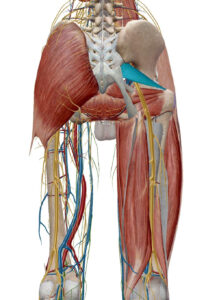
The piriformis muscle lies deep in the buttock and passes over the sciatic nerve. Spasm or thickening of this muscle can compress the nerve, causing pain.
Symptoms:
Deep, dull pain in the back of the hip
Pain worsens with prolonged sitting
Burning or numbness radiating to the leg
Diagnosis: Clinical examination and special tests (such as the FABER test).
Treatment: Physical therapy, manual therapy, and injections (corticosteroid, PRP).
3. Cluneal Nerve Entrapment
Cluneal nerves extend from the lumbar region to the buttock. Compression or irritation of these nerves causes localized gluteal pain.
Symptoms:
Burning or stabbing pain in the back of the hip
Pain worsens with prolonged standing or sitting
Sometimes radiates down the leg
Diagnosis: Clinical examination and nerve block injections.
Treatment: Nerve block injections, manual therapy, and targeted exercises.
4. Trochanteric Bursitis
This occurs when the bursae (fluid-filled sacs) on the outer side of the hip become inflamed. While pain is usually felt on the outside of the hip, in some cases it may radiate to the back.
Symptoms:
Tenderness and pain on the outer hip
Pain worsens when lying on the affected side
Difficulty climbing stairs
Diagnosis: Ultrasound or MRI.
Treatment: Corticosteroid injections, physical therapy, and activity modification.
5. Lumbar Facet Syndrome
Degeneration or overloading of the facet joints in the spine may cause pain radiating to the back of the hip and thigh.
Symptoms:
Deep, dull pain in the back of the hip
Pain worsens with standing or bending
Pain usually does not radiate to the leg
Diagnosis: Clinical examination and MRI.
Treatment: Physical therapy, facet joint injections, and manual therapy.
6. Sacroiliac Joint Dysfunction
The sacroiliac joint connects the spine to the pelvis. Inflammation or abnormal motion in this joint may cause buttock pain.
Symptoms:
Pain in the back of the hip and lower back
Pain worsens with sitting or bending
Sometimes radiates to the upper thigh
Diagnosis: Clinical examination and imaging studies.
Treatment: Physical therapy, sacroiliac joint injections, and exercise programs.
7. Deep Gluteal Pain Syndrome (DGPS)
Compression of the sciatic nerve by deep gluteal muscles leads to persistent buttock pain.
Symptoms:
Deep, constant pain in the buttock
Pain increases with prolonged sitting
Pain may radiate to the leg
Diagnosis: Clinical examination and MRI.
Treatment: Physical therapy, injections, and manual therapy.
Common Features of Buttock-Related Hip Pain
Often linked to prolonged sitting, poor posture, or repetitive movements.
Pain may mimic sciatica by radiating down the leg.
A detailed clinical examination and imaging are usually required for an accurate diagnosis.
Causes of Hip Pain Felt in the Groin
Groin pain is usually related to problems within the hip joint. Here are the most common causes:
1. Hip Osteoarthritis (Coxarthrosis)
Degeneration of the cartilage covering the hip joint leads to pain and stiffness.
Symptoms:
Deep groin pain
Pain worsens with movement
Morning stiffness
Treatment: Physical therapy, injection therapies, and in advanced cases, hip replacement surgery.
2. Femoroacetabular Impingement (FAI)
Abnormal bone structure in the hip joint causes impingement and pain.
Symptoms:
Pain in the front of the hip and groin
Pain increases with hip flexion and internal rotation
Treatment: Arthroscopic surgery or conservative management.
A tear in the labrum, the cartilage rim surrounding the hip socket, causes mechanical hip pain.
Symptoms:
Catching or locking sensation in the hip
Groin pain and stiffness
Treatment: Physical therapy or arthroscopic labral repair.
4. Avascular Necrosis (AVN) of the Hip
Loss of blood supply to the femoral head leads to bone death and joint damage.
Symptoms:
Deep groin and hip pain
Pain increases with weight-bearing activities
Treatment: Conservative management in early stages; surgical intervention in advanced cases.
5. Sports Hernia (Athletic Pubalgia)
A common condition in athletes, caused by strain of muscles and tendons in the groin.
Symptoms:
Sharp or dull groin pain
Pain worsens with coughing, sneezing, or sudden movements
Diagnosis: Clinical examination and ultrasound.
Treatment: Rest, physical therapy, and surgical repair in persistent cases.
6. Hip Capsulitis
Inflammation of the hip capsule leads to pain and restricted movement.
Symptoms:
Pain around the groin and hip joint
Stiffness and limited range of motion
Pain increases after prolonged sitting
Diagnosis: Clinical examination and MRI.
Treatment: Physical therapy, NSAIDs, corticosteroid injections.
7. Osteitis Pubis
Inflammation of the pubic bone and surrounding ligaments, common in athletes.
Symptoms:
Deep, dull groin pain
Pain worsens with activity and single-leg stance
Tenderness over the pubic area
Diagnosis: MRI and clinical findings.
Treatment: Rest, physical therapy, stretching, and pain relief medication.
8. Hip Fractures and Stress Fractures
Hip fractures are common in elderly individuals, while stress fractures may occur in athletes.
Symptoms:
Severe groin pain
Pain worsens with walking or weight-bearing
Leg shortening or external rotation in major fractures
Diagnosis: X-ray and MRI.
Treatment: Conservative management in stress fractures; surgical fixation or hip replacement surgery in displaced fractures.
Why Does Hip Pain Get Worse When Sitting?
Hip pain that worsens while sitting is usually caused by compression or pressure on the soft tissues around the hip. Prolonged sitting—especially on hard surfaces or in poor posture—places stress on the hip muscles and nerves. This pressure can cause nerve entrapment and muscle tension.
Other conditions such as lumbar disc herniation or sciatica may also trigger hip pain that radiates while sitting. In some cases, piriformis syndrome is responsible, where the piriformis muscle compresses the sciatic nerve, spreading pain from the hip to the leg.
Hip bursitis is another possible cause, as inflammation of the fluid-filled sacs around the joint can worsen discomfort when seated. If hip pain increases while sitting but eases when standing up, a detailed orthopedic evaluation is strongly recommended.
How Is Hip Pain Diagnosed Accurately?
Proper diagnosis of hip pain is essential to determine the exact source and to guide effective treatment. The diagnostic process involves a detailed patient history, physical examination, and modern imaging techniques.
1. Patient History and Symptoms
The first and most critical step is taking a thorough history:
Pain Location: Groin or buttock region
Pain Character: Sharp or dull? Triggered by movement?
Pain Duration: Acute (new onset) or chronic (long-term)?
Movement Relation: Which activities make the pain worse?
Neuropathic Features: Burning, tingling, or electric shock sensations suggest nerve-related pain (e.g., lumbar disc herniation).
2. Physical Examination
Specific clinical tests are used to assess the hip and surrounding structures:
FABER Test: Evaluates the hip joint and sacroiliac joint.
FADIR Test: Useful in diagnosing femoroacetabular impingement (FAI).
Trendelenburg Test: Detects weakness of the gluteus medius muscle (relevant in tendon tears).
Straight Leg Raise (SLR) Test: Identifies nerve compression due to lumbar disc herniation or sciatica.
3. Imaging Techniques
Imaging plays a key role in identifying structural problems and soft tissue lesions:
X-ray: First-line test to detect arthritis or fractures.
MRI: Provides detailed evaluation of soft tissues, ligaments, muscles, and labral tears.
Ultrasound: Useful for dynamic assessment of bursitis, effusions, and muscle injuries.
CT Scan: Offers detailed visualization of bone structures.
4. Diagnostic Injections
In some cases, even advanced imaging may not confirm the diagnosis. In these situations, diagnostic injections are used:
Local Anesthetic Injection: Temporary pain relief confirms the source of pain.
Corticosteroid Injection: Reduces inflammation and provides therapeutic relief.
When to See a Doctor for Hip Pain?
- Persistent pain despite rest and basic treatments
- Limited mobility or difficulty walking
- Night pain that disrupts sleep
- Sudden swelling or redness in the hip
- Difficulty standing up or bearing weight
Treatment Options for Hip Pain
Treatment depends on the underlying cause and severity of the pain. It is generally divided into non-surgical and surgical approaches.
1. Non-Surgical Treatments
Physical Therapy and Rehabilitation: Tailored exercise programs targeting the source of pain
Injection Therapies: PRP, exosome injections, corticosteroid injections
Medications: Pain relievers, muscle relaxants, and anti-inflammatory drugs
Lifestyle Modifications: Avoiding prolonged sitting, ergonomic adjustments, proper mattress selection
2. Surgical Treatments
Hip Arthroscopy: Used to treat labral tears and femoroacetabular impingement (FAI)
Total Hip Replacement: Recommended in advanced osteoarthritis or avascular necrosis
Lumbar Microdiscectomy: Performed to relieve nerve root compression in lumbar disc herniation
How to Prevent Hip Pain?
You can reduce the risk of hip pain by adopting the following simple but effective strategies:
- Regular Exercise: Strengthening and stretching exercises that support the hip and lower back.
- Proper Posture and Ergonomics: Avoid staying in the same position for long periods.
- Appropriate Footwear: Choose supportive and comfortable shoes.
- Weight Management: Excess body weight increases stress on the hip joints.
- Early Intervention: Consult a specialist promptly when pain begins.
The Role of Exercise and Rehabilitation in Hip Pain
Exercise and rehabilitation are not only part of the treatment process but also help prevent recurrence of hip pain. However, not every exercise is suitable for every patient, as the source of pain may differ.
1. Exercise Recommendations for Groin Pain (Hip Joint–Related Pain)
Hip Flexor Stretching: Reduces tightness in the groin.
Bridge Exercise: Strengthens hip muscles and improves stability.
Clamshell Exercise: Activates the gluteus medius.
Low-Impact Cardio: Swimming or stationary cycling without excessive joint loading.
2. Exercise Recommendations for Buttock (Gluteal) Pain (Extra-Articular Causes)
Piriformis Stretch: Relieves pressure on the sciatic nerve.
Deep Gluteal Strengthening Exercises: Improves hip stability.
Pelvic Tilt Exercises: Strengthens spine–hip connection.
Foam Roller Use: Helps relax gluteal muscles.
3. Exercises for Lumbar Disc–Related Hip Pain
McKenzie Exercises: Support spinal alignment.
Core Strengthening Exercises: Enhance lumbar and hip stability.
Sciatic Nerve Stretching: Reduces nerve tension.
What to Consider When Exercising for Hip Pain?
- Always perform exercises under the guidance of a physiotherapist or doctor.
- Stop any movement immediately if pain occurs.
- Maintain a balanced program of stretching and strengthening exercises.
Lifestyle Changes to Improve Quality of Life with Hip Pain
Hip pain can significantly limit daily activities, but simple adjustments may ease symptoms and enhance well-being.
Mind Your Sitting Posture
Avoid prolonged sitting.
Practice upright sitting.
Use cushions that support the lower back and hips.
Exercise Regularly
Strengthen hip and back muscles at least three times per week.
Choose low-impact cardio such as walking, swimming, or cycling.
Maintain a Healthy Weight
Excess weight increases joint stress.
Balanced nutrition helps maintain a healthy body weight.
Improve Ergonomics
Distribute body weight evenly when standing.
Use proper lifting techniques.
Avoid high-heeled shoes.
Optimize Sleeping Position
Side sleepers: place a pillow between the knees.
Back sleepers: place a pillow under the knees.
Frequently Asked Questions About Hip Pain
When should hip pain be considered serious?
If pain restricts movement, disrupts sleep, or does not improve with rest, consult a specialist.
Which doctor should I see for hip pain?
An orthopedic surgeon (orthopedics and traumatology specialist) is the right choice.
Why does hip pain worsen at night?
Joint inflammation or nerve entrapments may become more pronounced during rest.
What can be done at home for hip pain?
Rest, ice or heat application, and gentle stretching exercises can provide relief.
Can hip pain completely resolve?
With proper treatment and lifestyle changes, pain can be significantly reduced or controlled.
How is the cause of hip pain diagnosed?
Through physical examination, MRI, ultrasound, and X-rays.
Which movements worsen hip pain?
Prolonged sitting, climbing stairs, and excessive internal or external rotation of the hip.
Does hip pain affect walking?
Yes, especially in cases such as osteoarthritis, labral tears, or femoroacetabular impingement (FAI).
Does hip pain prevent sports participation?
Depending on the cause, some activities may be restricted, but most patients return to sports with proper treatment.
Which exercises are best for hip pain?
Hip flexor stretches, bridge exercise, piriformis stretch, and core strengthening.
Is ice or heat better for hip pain?
Ice is recommended in the first 48 hours of acute pain, while heat is helpful for chronic pain.
Does hip replacement surgery completely relieve pain?
Total hip replacement eliminates pain in most patients with advanced osteoarthritis.
Why is hip pain sometimes felt in the groin?
Hip joint problems (arthritis, labral tears) often radiate pain to the groin.
How can hip pain be confused with a herniated disc?
Disc-related pain radiates to the buttock and leg, while hip joint pain is usually felt in the groin.
In which age group is hip pain most common?
It is more common in older adults due to arthritis, but athletes and younger individuals can also experience it.
Why is hip pain more common in women?
Pregnancy, postnatal changes, osteoporosis, and hormonal factors increase risk.
What happens if hip pain is left untreated?
It may become chronic, restrict movement, and cause permanent joint damage.
Are PRP or corticosteroid injections effective for hip pain?
Yes, they can be very effective in inflammatory and soft tissue conditions.
Is swimming good for hip pain?
Yes, swimming strengthens muscles without overloading the joint.
Which activities should be avoided with hip pain?
Movements that trigger pain, prolonged sitting, heavy lifting, and sudden twisting.
Conclusion: Don’t Ignore Hip Pain
Hip pain is a significant health problem that directly impacts quality of life and mobility. The location of pain—whether in the groin or buttock—is an important clue to the underlying cause.
Early diagnosis and appropriate treatment reduce pain, prevent long-term damage, and restore mobility. Whether the cause is joint-related or due to spinal and nerve problems, a specialist evaluation and personalized treatment plan are key to lasting relief.
Do not ignore hip pain—taking action early with proper treatment and targeted exercises can restore quality of life and help you return to an active, pain-free lifestyle.
👉 For expert evaluation and treatment of hip pain, you may contact Dr. Utku Erdem Özer, an orthopedic surgeon specialized in hip disorders and surgery in Istanbul.